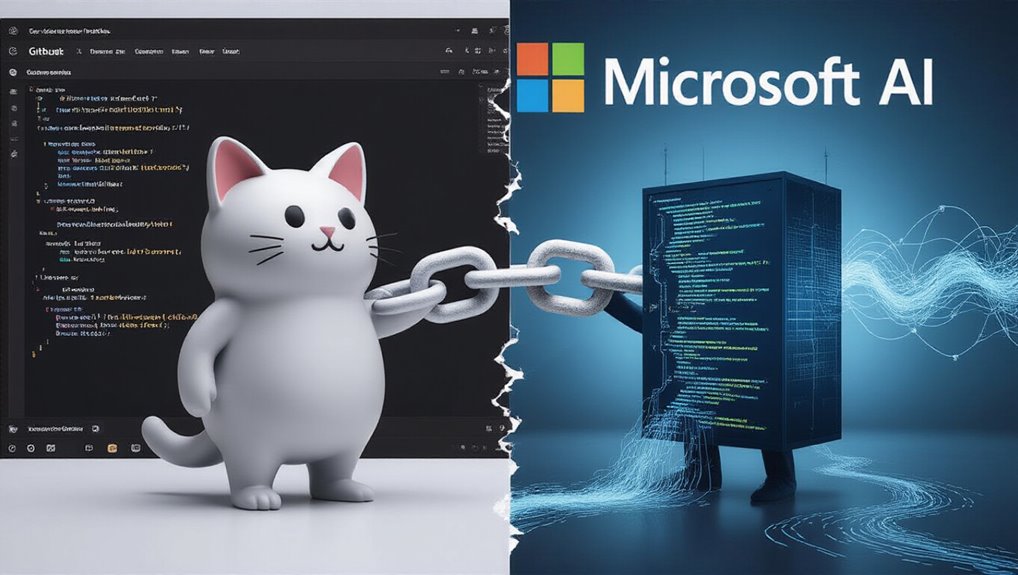
When does a subsidiary cease to be independent? This question looms large as Microsoft completes its organizational shift of GitHub into its CoreAI division in 2025, effectively ending the platform’s seven-year period of operational autonomy. The departure of CEO Thomas Dohmke marks a definitive turning point in GitHub’s corporate identity since its $7.5 billion acquisition in 2018.
The integration represents a strategic pivot for Microsoft, placing GitHub’s vast developer ecosystem directly under its AI leadership structure. You can observe three key changes in this transition:
- GitHub executives now report to multiple CoreAI leaders rather than a dedicated CEO
- Decision-making authority has shifted from GitHub’s independent governance to Microsoft’s AI strategy team
- The platform’s roadmap is increasingly aligned with Microsoft’s AI-first vision
GitHub’s growth metrics illustrate why Microsoft values tighter control. The platform hosts over 1 billion repositories and serves approximately 150 million developers worldwide. More importantly, GitHub Copilot has emerged as a revenue powerhouse, with Microsoft claiming its value now exceeds GitHub’s original acquisition price. This restructuring occurs as AI projects on GitHub have more than doubled in the past year, signaling massive growth in the space.
GitHub’s explosive growth and Copilot’s revenue potential reveal why Microsoft is tightening its grip on the developer platform.
The platform’s AI transformation is evident in usage statistics. Approximately 20 million users leverage Copilot, including 90% of Fortune 100 companies. The restructuring aims to streamline AI innovation, particularly around tools like Copilot that have become central to Microsoft’s developer strategy. Enterprise adoption is growing at 75% quarter-over-quarter, demonstrating the monetization potential that likely motivated Microsoft’s reorganization decision.
For developers, this shift raises important considerations about GitHub’s future direction. Will the platform maintain its community-centered approach, or will Microsoft’s commercial AI priorities take precedence? The transition may take 4-6 months to fully implement, similar to typical IT outsourcing timelines for complex systems. The answer likely depends on how Microsoft balances short-term revenue goals against GitHub’s role as an open developer ecosystem.
The CoreAI reorganization ultimately reveals Microsoft’s strategic calculation: GitHub’s greatest value lies not in its independence but in its integration with Microsoft’s broader AI ambitions. The question of control appears decisively answered—Microsoft has reclaimed the reins.