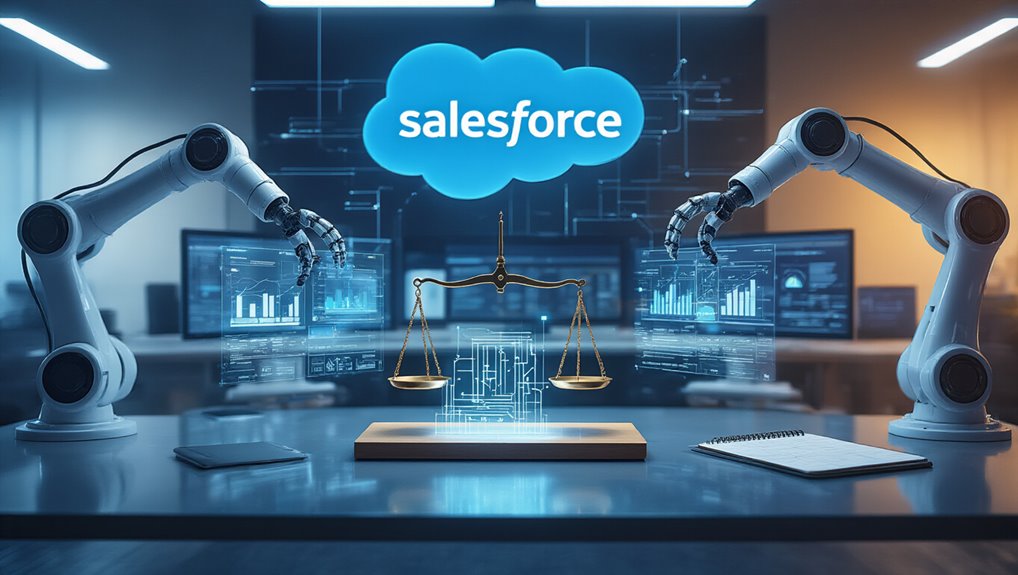
Salesforce’s vision for the Agentic Enterprise represents a fundamental shift in how organizations operate in the digital age. This model introduces a world where AI agents autonomously perform tasks, make decisions, and interact with systems on behalf of companies or individuals. These agents aren’t simple automation tools; they combine foundation models, rules, and architectures to enable flexible planning and adaptation in complex business environments.
The Agentic Enterprise isn’t just evolution—it’s a reinvention of organizational DNA through autonomous AI systems.
At the core of this vision lies the transformation of conversations into actions. AI agents automatically follow up on discussions and execute required tasks without human intervention. These capabilities are built directly into existing workflows and platforms like CRMs, collaboration tools, and data visualization software, making adoption seamless. Companies using this approach can create elastic workforces that scale beyond traditional limitations. The company’s internal deployment shows that using Agentforce 360 for routine tasks across departments has significantly increased employee focus and operational efficiency. The system implements robust performance monitoring to track metrics like error rates, escalation rates, and latency in real-time, ensuring continuous improvement.
The Agentforce 360 Platform provides the foundation for enterprise-grade AI agents through several key features:
- Conversational builder for easy agent creation
- Hybrid reasoning for improved decision-making accuracy
- Voice capabilities for hands-free interactions
- Pre-built process flows via the Skills Library
- Security guardrails and safe execution protocols
This platform connects to Data 360, which unifies information from all sources through a unified data layer. This guarantees agents operate with complete, accurate information when making decisions or taking actions. Similar to an enterprise service bus, it standardizes communication and eliminates complex point-to-point connections between applications. The system translates complex data into business language through Tableau Semantics and maintains consistent metrics across all clouds.
Practical applications span numerous business functions. Agentforce Sales automates prospecting and quoting, Marketing builds campaigns autonomously, Service provides always-on customer support, and Field Service handles scheduling and data capture. These tools integrate seamlessly with collaboration platforms like Slack.
The question remains whether this represents workplace revolution or risk. While offering unprecedented efficiency and scalability, organizations must carefully consider implications for workforce transition, data security, and maintaining appropriate human oversight. The Agentic Enterprise promises transformation, but requires thoughtful implementation to maximize benefits while minimizing potential downsides.