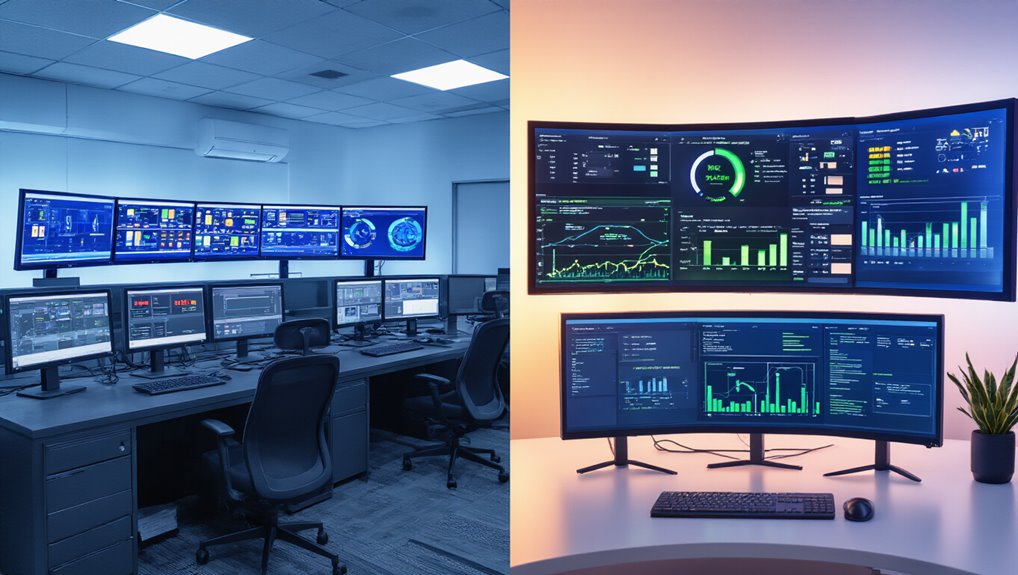
The evolution of IT service management is witnessing a fundamental shift as organizations navigate between predictive AIOps and generative ITSM technologies. Where predictive systems once represented cutting-edge innovation with their ability to forecast IT issues through historical data analysis, they now face displacement by more sophisticated generative approaches that not only predict but actively solve problems.
Predictive AIOps has traditionally excelled at pattern recognition and anomaly detection. These systems ingest metrics, logs, and events to identify potential failures before they impact services. However, they suffer from key limitations: they depend on human interpretation of alerts, struggle with false positives, and lack the ability to create actionable solutions autonomously. This approach ultimately maintains the black box nature that characterizes most predictive AI models, limiting transparency in decision-making processes.
Generative ITSM represents the next evolutionary stage in IT automation. Unlike its predecessor, generative technology creates plain-language summaries, remediation guides, and automation scripts without human intervention. Implementing these systems can yield cost-benefit advantages of up to 40% operational savings while delivering enhanced quality and productivity. You’ll find these systems can draft complex resolutions while maintaining awareness of enterprise context—capabilities that predictive models simply cannot match.
The market is responding decisively to these differences. Organizations increasingly recognize that while prediction is valuable, action drives results. Generative ITSM systems process millions of data points to deliver real-time, proactive intelligence that directly addresses issues rather than merely flagging them. They use retrieval-augmented generation to ensure their outputs remain contextually relevant and up-to-date.
The productivity impact is substantial. Teams using generative ITSM report significant reductions in manual intervention time. This frees technical staff for strategic initiatives while routine issues receive immediate, automated attention. The technology continuously improves through learning loops, adapting faster than static predictive models ever could.
As IT environments grow more complex, the limitations of purely predictive approaches become increasingly apparent. Forward-looking organizations recognize that the future belongs to systems that can not just anticipate problems but autonomously resolve them. The transition represents a significant leadership transformation beyond merely upgrading technical systems to reimagining how IT operates and delivers value. In this automation revolution, generative ITSM is clearly pulling ahead of its predictive predecessor.