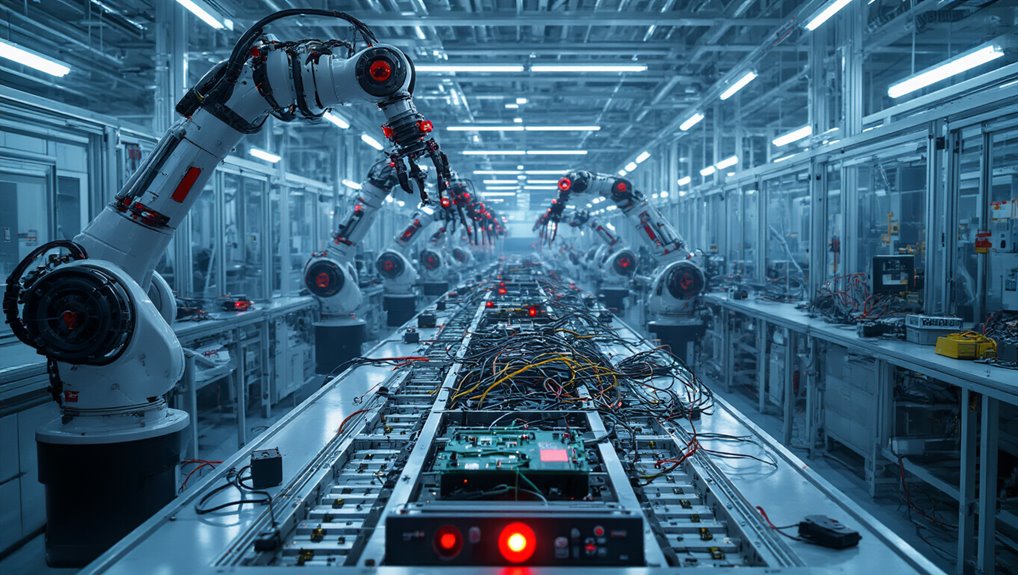
Why do so many businesses rush to automate every possible process without considering the consequences? The reality is that over-automation creates significant risks that can damage your organization more than help it.
Compliance and data security vulnerabilities represent the most immediate threat. Automated processes access sensitive data around the clock, and security gaps create entry points for cyberattackers. The average data breach costs $4.88 million, not counting reputational damage and legal consequences. Organizations must implement robust security protections and audit trail logging, especially in regulated industries like financial services. Without these safeguards, you jeopardize exposing employee data and customer records to unauthorized access. Regular audits and access controls help maintain data integrity across automated systems.
Security gaps in automated systems create costly entry points—with breaches averaging $4.88 million before reputational and legal damages.
System failures in over-automated environments trigger cascading problems across departments. When multiple teams rely on a single automated system, failure in one area spreads rapidly throughout the organization. Power outages, technical glitches, and cybersecurity breaches can halt operations entirely when you lack redundancy or manual backup processes. These interconnected vulnerabilities extend beyond your company boundaries through vendor and third-party connections. Incomplete or inconsistent source data produces incorrect automated decisions that compound across your workflows.
Employee engagement suffers dramatically under excessive automation. Nearly 90% of employees feel burdened with repetitive tasks, yet over-automation eliminates the meaningful work that drives job satisfaction. When you mechanize too many processes, you remove opportunities for creativity, problem-solving, and professional development. This creates a workforce that feels undervalued and unchallenged, leading to decreased motivation and productivity.
Innovation disappears when automation replaces human strategic thinking. Groundbreaking ideas originate from human experiences, observations, and intuition—qualities that algorithms cannot replicate. Over-automated systems lack the flexibility and adaptability needed to handle unforeseen challenges. You need human insight for developing strategy and responding to unique situations. Delegating too many tasks to machines risks loss of human insight essential for breakthrough innovations.
Smart process optimization means finding the right balance between automation and human involvement. Focus on automating truly repetitive tasks while preserving roles that require judgment, creativity, and strategic thinking. Implement strong security measures, maintain backup processes, and safeguard your employees retain opportunities for meaningful contribution. This balanced approach delivers efficiency without the devastating risks of over-automation.