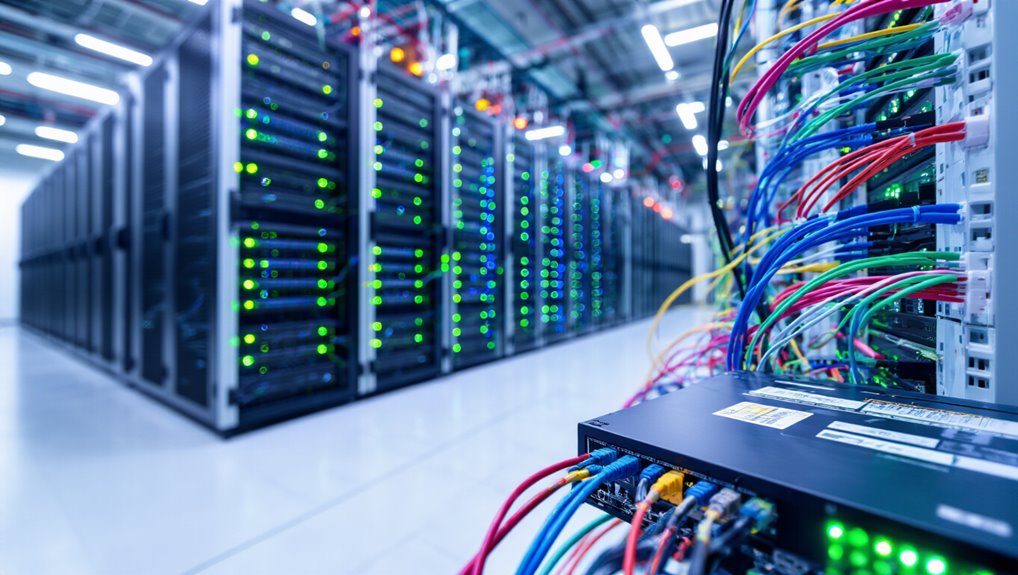
In today’s complex IT environments, network discovery serves as the essential first step in building a thorough asset inventory. This automated process scans your network segments to identify every connected computer and device, functioning like digital radar that locates laptops, smartphones, printers, and servers across your entire infrastructure. For IT Asset Management teams, network discovery provides the foundational data needed to create complete, accurate records in your Configuration Management Database.
Network discovery functions as digital radar, automatically scanning your infrastructure to identify every connected device and build the foundation for accurate asset management.
The discovery process begins with preparation. You’ll define IP ranges, gather necessary credentials, and establish scan schedules that minimize disruption. Next, your discovery tools probe designated network segments using protocols like SNMP, WMI, and SSH. These probes send ICMP pings and ARP requests to detect active IP addresses. Once devices respond, the system marks them as active and begins collecting detailed information about hardware specifications, installed software, and current configurations. This data then populates your central asset database for categorization, monitoring, and reporting.
You can choose between two primary discovery methods. Active discovery directly scans your network with probes or agents, providing real-time data on IP addresses, operating systems, and open ports. This approach works well for fast initial setup in known subnets or cloud environments, though it generates network traffic that requires careful scheduling. Passive discovery takes a different approach by listening silently to network packets, capturing information about IP addresses, MAC addresses, and hostnames without sending probes. This method consumes less bandwidth and reveals historical activity patterns through machine learning analysis.
Advanced discovery techniques offer even greater visibility. IP Address Management discovers subnets and tracks DHCP servers through router tables. Switch Port Mapping connects devices to specific switch ports using MAC and IP addresses. Integration with SIEM systems, CMDB platforms, and ITSM tools creates cross-referenced asset details that identify dependencies and relationships throughout your infrastructure.
For ITAM programs, network discovery enables continuous monitoring of dynamic environments, detects unauthorized shadow IT and rogue devices, and supports vulnerability assessments across all discovered assets. This exhaustive visibility guarantees your asset inventory remains accurate and audit-ready. iPaaS platforms further streamline integrations between discovery tools and ITAM systems by providing pre-built connectors that reduce implementation time and simplify data synchronization.