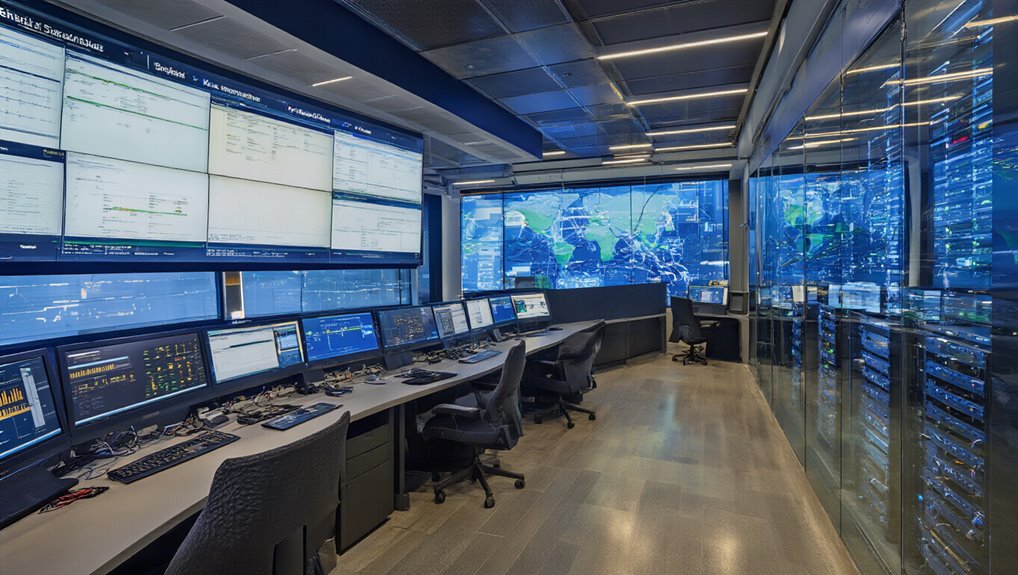
Across the maritime industry, vessel downtime is rarely the result of a single mechanical failure. It typically emerges from a chain of overlooked decisions spanning onboard crews and shore-based teams.
Missed maintenance windows, delayed defect reporting, and fragmented technical oversight combine to turn minor issues into full operational stoppages.
Consider what actually drives unplanned downtime:
- Disconnected IT and OT teams slow response to emerging faults
- Deferred maintenance creates compounding technical risk
- Poor communication between vessel and shore delays corrective action
Integrated technical management unifies maintenance planning, procurement, and operational oversight to intercept failures before they halt operations. Financial penalties apply when vessel issues delay departure, making rapid resolution a commercial imperative, not just an operational one.
Mechanical and equipment failure remains the most frequent cause of unplanned downtime, with critical machinery faults spanning main engines, auxiliary systems, and propulsion components capable of triggering cascading operational losses that extend well beyond the initial repair window.
Adopting an outsourced IT/OT ServiceOps model can deliver measurable operational cost savings while ensuring continuous monitoring and faster incident resolution.
Connect Ships and Shore Teams on One Integrated Network
When vessel and shore teams operate on separate systems, the gap between them becomes a liability. Integrated ship-to-shore networks close that gap by connecting crews, fleet managers, and technical teams in real time.
These networks rely on layered technologies:
- Cellular for near-port connectivity
- WiMAX for mid-range coverage
- Satellite for deep-sea operations
This unified environment enables remote diagnostics, centralized fleet visibility, and faster maintenance escalation. Real-time visibility provides instant tracking and alerts for transaction statuses and operational events.
One U.S. Navy program reduced troubleshooting time from three weeks to 2.8 hours using remote support. Shore teams can resolve issues without waiting for a port call.
Bandwidth management prevents leisure and entertainment activities from consuming connectivity resources critical to operational data flow and remote support functions.
Across vessel classes from patrol boats to frigates and corvettes, embedded encryption mechanisms protect all communications transmitted over these integrated networks, preserving security and reliability even in highly dense electromagnetic environments.
How Predictive Maintenance Reduces Unplanned Maritime Downtime
Predictive maintenance shifts maritime operations from fixed service schedules to condition-based intervention, using real-time sensor data and machine learning to forecast equipment failure before it occurs.
Sensors monitor temperature, pressure, vibration, and engine performance continuously. When readings deviate from established baselines, teams receive early alerts before breakdowns occur. This approach also helps reduce the operational burden caused by legacy systems that resist modern integration protocols.
The results are measurable:
- 40–50% reduction in unplanned downtime
- 10–20% boost in asset availability
- 15–25% improvement in mean time between failures
Earlier detection creates wider repair windows, allowing crews to address problems during scheduled port calls rather than responding to costly emergency failures mid-voyage.
AI-powered predictive maintenance forecasts component failure 30 to 90 days in advance, giving fleet operators actionable lead time to plan parts procurement, schedule technicians, and avoid the cascading damage that emergency breakdowns cause to adjacent components. Unlike preventive maintenance, which follows predetermined schedules regardless of actual equipment condition, predictive maintenance continuously assesses real-time asset performance to plan interventions only when necessary.
Lock Down Maritime OT Networks Before Threats Reach Critical Systems
Reducing unplanned downtime through predictive maintenance protects vessel availability, but those gains mean little if the operational technology (OT) networks supporting those systems are left open to attack.
Maritime OT security requires layered defenses across four core areas:
Maritime OT security demands layered defenses — because a single gap is all an attacker needs.
- Segment networks using VLANs, DMZs, and physical separation to slow lateral movement
- Restrict remote access with MFA, dedicated pathways, and vendor-defined permissions
- Harden legacy devices by replacing end-of-life systems, removing default credentials, and modernizing older protocols
- Monitor continuously through traffic audits, penetration testing, and configuration reviews
Each layer closes a pathway attackers would otherwise exploit. Middleware solutions can simplify integration and enforce consistent security controls across heterogeneous OT and IT systems.
Smart port technologies, including 5G networks, expanded satellite constellations, and broadened device connectivity, have significantly magnified the potential impact of a cybersecurity breach across ship-to-shore operations.
Build a 24×7 Maritime Support Model That Keeps Vessels Operational
Securing OT networks protects the systems that keep vessels running, but protection alone does not keep operations moving when something breaks. Integrated IT/OT workflows enable real-time information sharing to resolve incidents faster and reduce downtime by up to 30% through automated processes and AI-driven insights, as demonstrated by AI-driven ITSM.
MoPSW’s 24×7 Quick Response Team demonstrates what continuous maritime support requires in practice.
DG Shipping coordinates welfare and operational response for vessels in high-risk zones like the Persian Gulf.
Build a functional support model using these four components:
- Dedicated response teams available around the clock
- Centralized coordination through DG Shipping channels
- Rapid escalation protocols for active maritime threats
- Welfare support systems integrated with operational response
Continuous coordination prevents disruptions from becoming vessel-stopping crises. Maritime delays can cost thousands per hour, making immediate round-the-clock response a direct factor in controlling operational expenses. Australia’s naval shipbuilding plan is projected to generate 15,000 new jobs, reflecting the scale of workforce infrastructure required to sustain continuous maritime operational readiness at a national level.