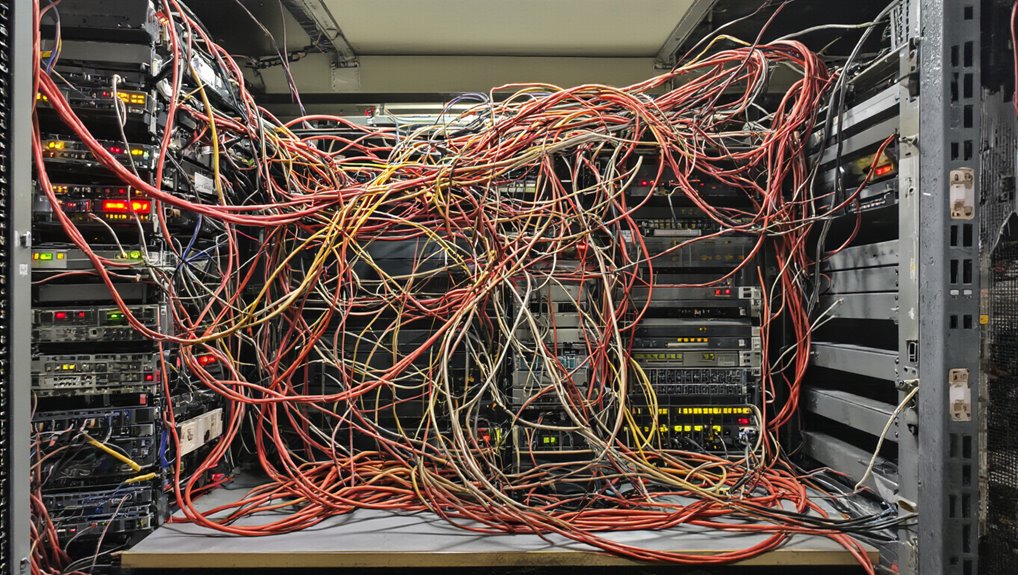
Why CSM and ITSM Were Never Designed to Share Agents?
Customer Service Management (CSM) and IT Service Management (ITSM) were built to solve different operational problems, and that distinction shapes everything from process design to agent behavior.
CSM and ITSM were built to solve different problems — and that difference shapes everything.
CSM serves external customers and partners. ITSM serves internal employees through IT operations. This separation supports aligned objectives between business goals and operational workflows.
Each discipline carries its own:
- Work objects — CSM uses Cases; ITSM uses Incidents, Problems, and Changes
- Process logic — CSM prioritizes customer communication; ITSM focuses on technical restoration
- Skill requirements — CSM demands service language; ITSM demands technical triage
Treating them as interchangeable ignores the architectural and operational boundaries that keep both functions effective. CSM licensing covers both customer-facing and internal IT service management needs, reflecting how deliberately separated these two functions are by design.
CSM and ITSM also differ at the workspace level, where CSM Agent Workspace is specifically positioned to handle integrations with ITSM, ITOM, and CPM rather than operating as a shared environment with ITSM agents.
Where Context Dies Between Customer Cases and IT Tickets?
The gap between customer cases and IT tickets is not a communication problem — it is a structural one.
Each system captures different data for different purposes, so context fragments the moment a case crosses boundaries. Modern deployments often rely on APIs and middleware to try to reconnect those boundaries, but the structural mismatch persists.
The most common breakpoints include:
- Handoffs — required fields and troubleshooting decisions go unrecorded before reassignment
- Escalations — the customer narrative disappears while only the technical symptom transfers
- Tool switching — relevant data scatters across systems instead of staying in one view
Without shared context, the next agent rebuilds the problem from scratch, extending resolution time materially. Bottlenecks like these are process problems, not people problems, and no amount of additional staffing resolves the structural gaps causing them. When voice interactions are involved, urgency and technical nuance emerge together on calls that agents must prioritize over documentation, meaning late voice context routinely strips handoff summaries of the detail needed for clean triage.
How Shared Agents Create ITSM-CSM Bottlenecks That Delay Resolution?
When one agent pool handles both ITSM and CSM work simultaneously, bottlenecks form quickly. Incidents, service requests, and customer cases compete for the same limited capacity. This problem is exacerbated by poor data quality that disrupts workflows and reduces productivity.
Shared agent pools do not balance ITSM and CSM workloads. They force them to compete.
When volume spikes in one stream, it pulls resources from the other.
Three patterns consistently slow resolution:
- Queue absorption – One work type consumes capacity the other urgently needs.
- Silent backlog buildup – Without separate visibility, overloaded queues go undetected until resolution times have already climbed.
- Uncoordinated automation – Multiple automations acting on the same ticket stream amplify contention rather than reduce it.
Shared pools do not balance workloads. They obscure them. Without shared agent visibility, triage can route a ticket to one team while first-response replies and a runbook executor resolves it simultaneously based on passing health checks.
Delays in service delivery reduce productivity and negatively impact both employee and customer satisfaction, making it critical to address avoidable errors and delays before they compound across shared queues.
Why Training Doubles When Agents Cover Both CSM and ITSM?
Covering both CSM and ITSM does not consolidate skill requirements—it doubles them. Agents must learn two separate ticket lifecycles, two sets of escalation rules, and two process goals.
Training expands substantially because each domain carries distinct responsibilities:
- Customer communication and omnichannel intake for CSM
- Incident, problem, and change handling for ITSM
- Cross-system ticket association and status propagation
- Customer-visible versus internal-only activity distinctions
- Scenario-based instruction for misrouting prevention
Role blending forces agents to retain more procedures and apply them consistently under pressure. That volume increases onboarding time and raises the risk of inconsistent handling across both service models. CSM focuses on external customers who buy or use a product, while ITSM focuses on internal employees and stakeholders, meaning agents must shift their communication approach and resolution priorities depending on which domain a given request falls under. Organizations also face measurable operational efficiency impacts when agents split focus across both domains.
Why Role Separation Beats the Shared-Agent Model?
Doubling training requirements signals a deeper structural problem: the shared-agent model is not built for the demands it creates. Role separation directly addresses this by aligning agents to one service audience and one set of performance goals.
Separation delivers three clear advantages:
- Cleaner routing — Cases reach agents who understand the correct service context.
- Clearer ownership — CSM agents own customer satisfaction; ITSM agents own internal service reliability.
- Stronger governance — Explicit role assignments in ServiceNow prevent accidental overreach across domains.
Organizations managing both disciplines need distinct roles to scale effectively without sacrificing service quality in either domain. Institutions like colleges also recognize this principle, offering dedicated Military & Veteran Support services separate from general student affairs to ensure focused, specialized assistance. For complex environments, system integrators help eliminate technology silos by combining disparate IT subsystems into cohesive solutions system integrators.