



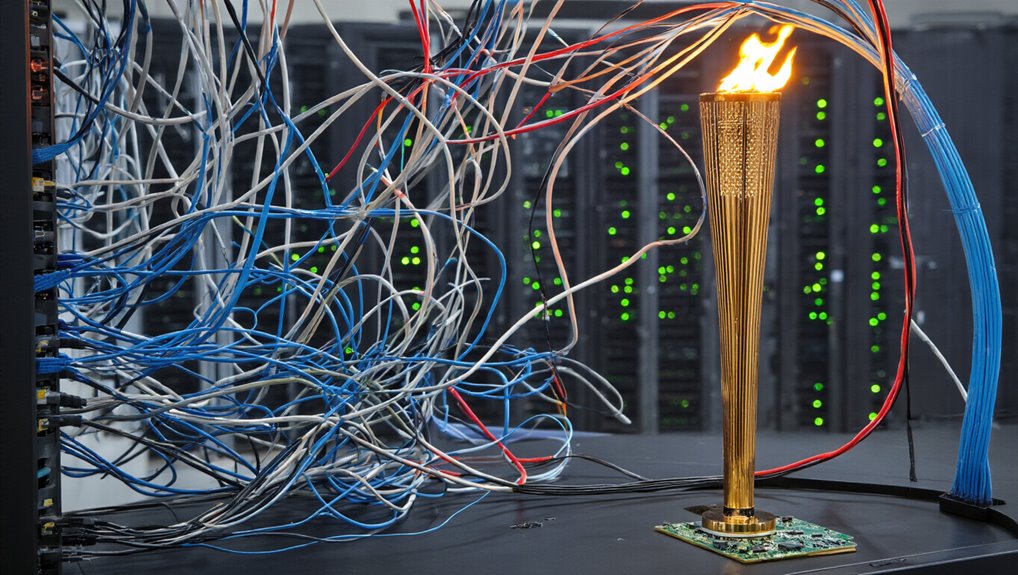
Why ITSM Coordination Breaks Before the Model Does
When ITSM automation breaks down, the failure rarely starts with the AI model itself. The breakdown usually happens earlier, in the data, processes, and coordination structures the model depends on.
Three problems appear most often:
- Broken data foundations – Missing fields, duplicate records, and stale CMDB entries corrupt predictions before recommendations reach service teams.
- Unstable workflows – Automation amplifies process variation instead of correcting it when underlying workflows are undocumented or inconsistent.
- Coordination failures – Agents misinterpret handoff messages and lose critical information during exchanges.
The model is typically the last thing that fails. Failures follow predictable cascade patterns across memory, reflection, planning, and action, where each corrupted decision propagates downstream before monitoring catches it. Organizations that deploy AI agents without embedding governance into core architecture face post-deployment rollback rates as high as 74%, a structural problem that no amount of model tuning can resolve. Integrating service request management and clear escalation paths reduces the chance that small coordination errors become system-wide failures.
Define Agentic ITSM Roles Like You’re Building a Team
Building an agentic ITSM system without defined roles is like staffing a service desk without job descriptions. Everyone acts, but nothing coordinates.
Effective deployments separate reasoning from execution and assign agents by workflow type and risk level. Service Operation processes should inform how agents are distributed across daily support tasks.
Separate reasoning from execution. Assign agents by workflow type and risk level before deployment begins.
Core agent roles include:
- Triage agent: classifies and routes incidents
- Resolution agent: executes approved remediation steps
- Coordination agent: manages multi-step workflows
- Validation agent: confirms outcomes or escalates
- Knowledge agent: surfaces and updates documentation
Human roles—service owner, analyst supervisor, approver, and governance lead—define boundaries and authorize consequential actions.
Role design should target specific metrics like SLA compliance or MTTR, not isolated use cases. Agents should be evaluated with the same rigor as direct reports, with escalation and resolution rates tracked continuously to diagnose underperformance and determine readiness for expanded autonomy. Each agent operates within a governed execution layer where actions remain policy-bound and reversible, ensuring traceability without sacrificing autonomy.
ITSM Ownership Gaps Are Where Agentic Workflows Fail
Ownership gaps are the most common reason agentic ITSM workflows break down after launch. When no single role is accountable for the full workflow, execution becomes inconsistent.
Common failure patterns include:
- Scope ambiguity — no one knows where responsibility starts or ends
- Unclear task boundaries — agents act, but no owner handles exceptions
- Weak governance — outputs go unreviewed and changes go ungoverned
A single agent spanning complex workflows creates a single point of failure. Every workflow needs a named owner responsible for behavior, outputs, and evolution — not just a collection of loosely delegated tasks. Without formal governance for machine identities, including least-privilege access, lifecycle management, and access revocation, agent deployments expand the attack surface across every system they touch. Industry analyses report 60%–80% of enterprise AI projects fail to deliver expected outcomes, most often because the organizational structures needed to support non-human accountability were never put in place. Implementing standardized frameworks can reduce these failures by clarifying roles and processes.
Connect the Systems Your ITSM Agents Need to Execute
Agentic ITSM workflows fail when the systems behind them are disconnected, outdated, or inaccessible. Agents need live data from multiple sources to act reliably.
Agentic ITSM workflows are only as reliable as the live, connected data powering them.
The core systems required include:
- Identity platforms (Active Directory, Okta, Azure AD) for verifying users and permissions
- ITSM tools (ServiceNow, Jira) for ticket creation, routing, and resolution
- Asset management tools (Jamf, Intune) for device context and compliance state
- CMDBs for accurate configuration data
- Knowledge bases for correct workflow selection
Disconnected or stale data in any of these systems produces misrouted tickets, false positives, and incomplete execution. Clean, connected data is non-negotiable. Unlike traditional chatbots, ITSM agents connect directly to these systems to access data and reason, enabling them to autonomously perform tasks like provisioning software and updating user permissions without human intervention.
Most agent implementations fail not because of flawed AI logic, but because of poor data infrastructure that leaves agents without the comprehensive context they need to make accurate decisions. Reliable middleware and integration layers such as message-oriented middleware ensure the necessary interoperability and data flow between these core systems.
Catch Agentic ITSM Coordination Failures Before They Cascade
When one agent in an ITSM workflow passes a flawed output to the next, what starts as a local mistake can spread into a full coordination failure before anyone intervenes. Catching these failures early requires recognizing specific warning signals:
- Ambiguous handoffs — roughly 42% of multi-agent failures trace back to unclear transfers
- Inconsistent task execution — signals agent state or protocol drift
- Unexpected parallel actions — indicates coordination loss on shared resources
- Poor auditability — unclear attribution slows diagnosis
Feedback loops amplify small errors exponentially. Circular dependencies create deadlocks. Weak observability delays detection until service impact has already grown. Research into agentic system faults found that Dependency and Integration Failures represent the single largest root cause category, accounting for 19.5% of all identified failures across studied systems. Robust API integration can reduce propagation by ensuring consistent, monitored data flows between components.
Two agents can each act correctly according to their local objectives while their combined actions produce a catastrophic outcome, a phenomenon known as emergent cascading behavior that no single-agent diagnostic will surface on its own.