What Drives AI Agent Run Costs
Running an AI agent costs more than most teams expect, and token volume explains most of that gap. Every model call charges for input tokens plus output tokens, and agentic workflows consume far more of both than simple chat or code tasks. The same task can vary by up to 30x in total tokens across runs. Key cost drivers include:
- Input token volume – longer context means higher cost per call
- Model tier selection – frontier models cost *notably* more than budget options
- Tool calls and retries – each adds reasoning cycles and billable tokens
- Repeated context transmission – prior messages reprice every turn
Coding agents consume 20–30x more tokens per interaction than standard chat, and a single task can require anywhere from 35 to 181 API calls depending on the architecture in use. Teams that have applied tiered model selection and caching strategies have reported 68% cost reductions with minimal impact on output quality. Many organizations also see measurable operational benefits from automation, including a 22% reduction in operating costs.
What Your Infrastructure Bill Looks Like in Production
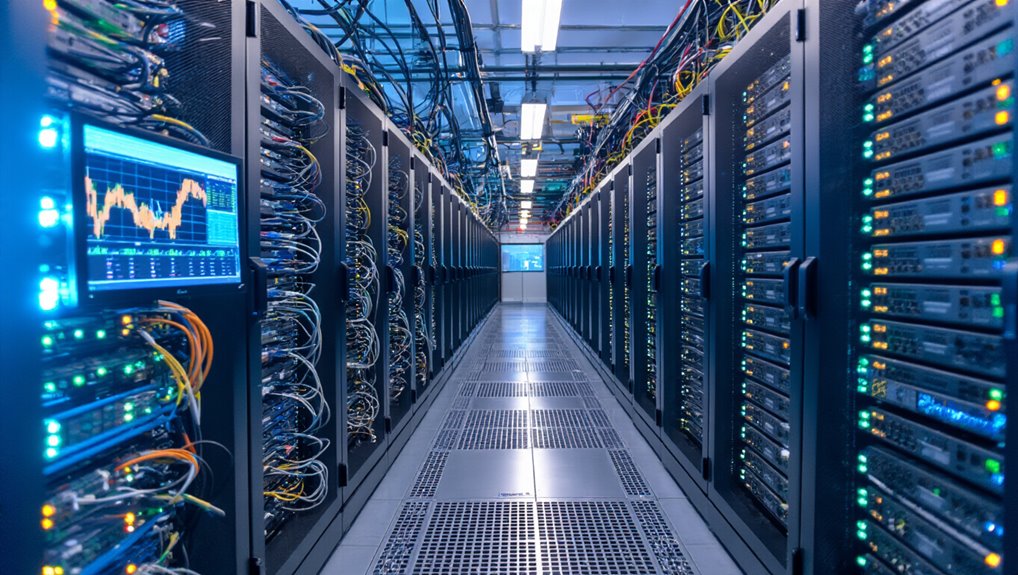
Beyond the model API bill sits a second cost layer that catches many teams off guard: the infrastructure required to keep an agent running reliably in production.
The model API bill is only half the story — production infrastructure is the cost that blindsides most teams.
At moderate scale, teams typically spend across several categories:
- Compute and orchestration: $500–$2,000/month
- Storage and state (PostgreSQL, Redis): $300–$1,300/month
- Vector database: $100–$500/month
- Observability tooling: $200–$2,000/month
A single production agent at moderate traffic runs $1,000–$4,000/month before any model costs. Small businesses often benefit from affordable, scalable ITSM solutions that can reduce overhead for these components.
High-availability requirements push totals higher.
Mid-scale deployments handling 50,000 tasks daily reach $8,000–$23,000/month when compute, monitoring, and retrieval infrastructure combine.
Infrastructure and hosting typically accounts for 10–20% of total AI agent operating costs, making it the second-largest expense category after LLM API calls.
Async workloads introduce additional complexity, as job queues like SQS add both operational costs and new failure modes that require ongoing engineering attention.
Why Engineering Time Dominates AI Agent Operating Costs
The infrastructure bill is real, but for most teams it is not the largest line item.
Engineering time is. Prompt tuning alone adds $1,000–$2,500 monthly.
Post-launch maintenance runs $40,000–$80,000 in the first year.
Ongoing refinement can reach $15,000 per month.
These costs come from several recurring sources:
- Prompt iteration – Agents often need 100+ evaluation cycles per phase.
- Debugging – Average resolution takes 42 minutes per incident without proper tracing.
- Regression testing – Every model or prompt change triggers a new test cycle.
- Human cleanup – Failed tasks require diagnosis and downstream correction.
Engineering overhead scales with agent complexity. Without agent observability tooling, there is no visibility into success reasons, failure reasons, or cost, which compounds every hour spent diagnosing production issues. At scale, a 95% success rate across 10,000 monthly interactions still produces 500 failure cases requiring human review, diagnosis, and correction each month.
ITSM alignment also matters for long-term operations, since Information Technology Service Management practices reduce redundancy and improve cross-team coordination.