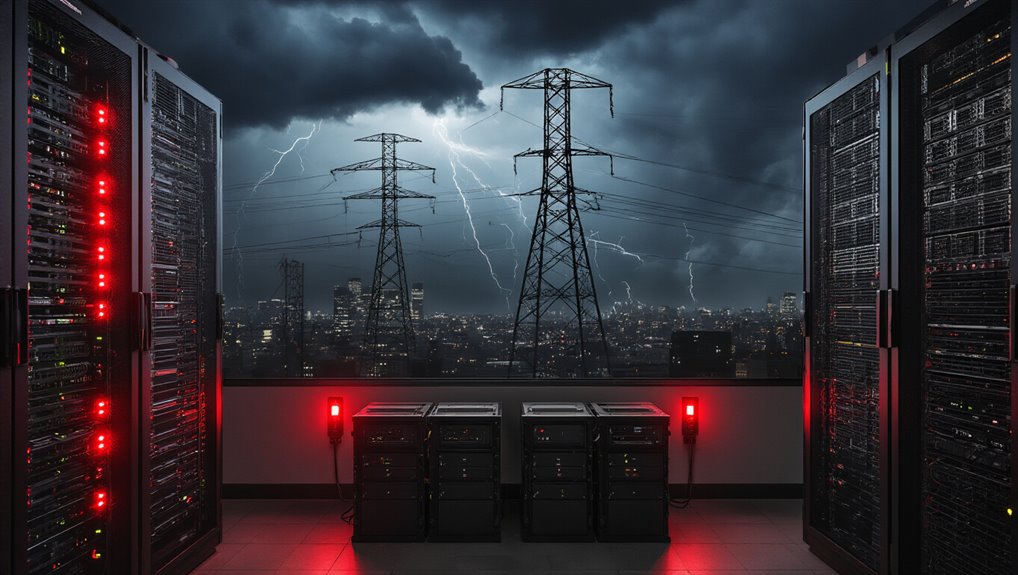
As power grids across the United States face unprecedented challenges, IT teams must prepare for potentially catastrophic failures that could devastate their operations. Rising temperatures, electric vehicle adoption, and increasingly complex power systems have placed unprecedented strain on aging grid infrastructure. The 2021 Texas power crisis demonstrated how quickly systems can collapse, with over 40% of grid capacity failing within hours during severe weather.
Power loss represents the leading cause of data center outages globally, accounting for 44% of all incidents according to a 2022 survey. These failures typically stem from three critical points of vulnerability:
- Uninterruptible power supply (UPS) malfunctions
- Transfer switch failures
- Generator problems
Most backup power systems are designed for temporary outages, not the extended failures that could last days or weeks following a major grid collapse. Organizations should plan for the worst-case scenario by considering geo-redundant cloud services as part of their disaster recovery strategy. This limitation becomes particularly concerning as power demands increase with technologies like AI that require substantial energy resources. The adoption of intermittent renewable energy further complicates the supply-demand balance, creating additional instability risks for critical systems.
Cyberattacks represent another significant threat to grid stability. While manual operation capabilities could mitigate these attacks, implementing such systems proves challenging in the U.S. context. IT teams must prepare for scenarios where power infrastructure is compromised by both natural and human-caused disasters.
Financial implications of severe outages are substantial, with costs potentially exceeding $1 million for data centers in extreme cases. Organizations must develop thorough business continuity plans that address extended utility power loss scenarios. Effective data management practices are essential to ensure critical information remains accessible during emergencies. Regular simulations and drills improve readiness for when—not if—grid failures occur.
Technical solutions like Partial State of Charge battery technologies and enhanced UPS systems can improve resilience, but require expertise to implement effectively.
Organizations should:
- Conduct risk assessments specific to regional grid vulnerabilities
- Develop protocols for graceful system shutdowns during emergencies
- Verify critical data is backed up with redundant systems in geographically diverse locations
- Train staff on manual procedures for essential operations
The question isn’t whether the U.S. will experience another significant grid failure, but whether your IT team will be prepared when it happens.