Four decisive trends are reshaping the global technological landscape as artificial intelligence experiences unprecedented adoption across industries. Corporate AI implementation has surged dramatically, growing from less than 5% to 39% of companies in just two years. This rapid expansion has been fueled by massive investment, with global AI spending projected to reach $2 trillion by 2026.
AI adoption is transforming businesses at breakneck speed, with global spending approaching $2 trillion by 2026.
Organizations are moving beyond experimentation, with over two-thirds now deploying AI across multiple business functions. Successful organizations approach this as a business model transformation rather than a purely IT-focused initiative.
The economic impact of this transformation is creating what experts call an “AI factory economy.” These specialized infrastructures accelerate both model development and use-case deployment. Autonomous AI agents represent a particularly promising segment, with market forecasts reaching $8.5 billion by 2026 and potentially $35-45 billion by 2030.
Industrial automation continues its march forward, with 5.5 million industrial robots expected to be in operation by 2026.
AI systems are evolving from simple tools to sophisticated agents that function as digital colleagues. These AI assistants handle specific, repeatable tasks under human direction while being integrated into daily operations. Multi-agent systems are transitioning from experimental labs to widespread production use, enabled by mature protocols and standardization efforts.
Market watchers have identified 2026 as the likely inflection point where these agentic workflows begin delivering substantial value. The emergence of “super agents” that consolidate user interactions may reshape market power dynamics across technology sectors.
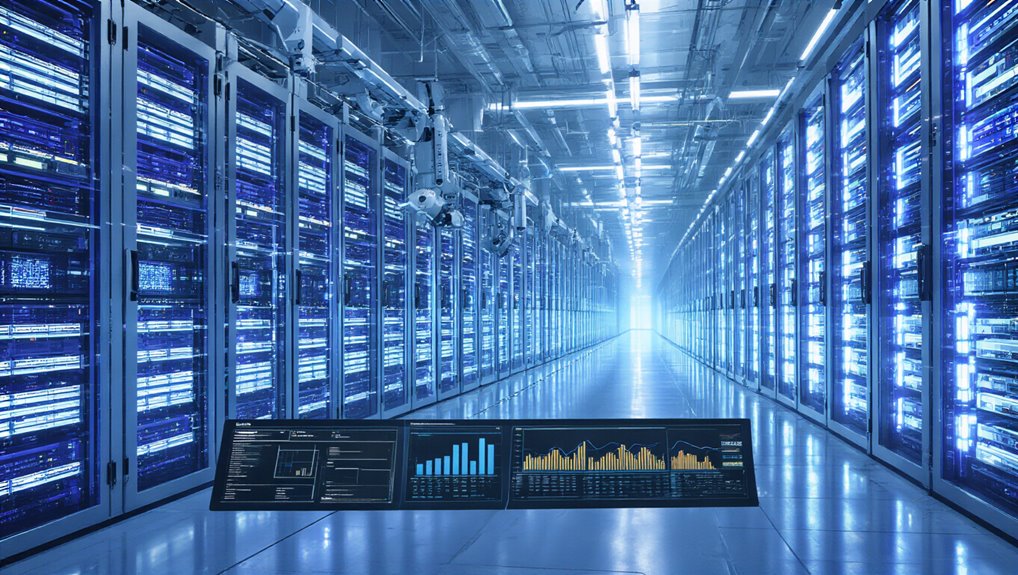
The infrastructure supporting this AI revolution requires unprecedented investment. New data centers worth nearly half a trillion dollars will handle about two-thirds of all AI computing power needs by 2026. The significant economic contribution of these facilities is evidenced by data showing that without them, GDP growth in the first half of 2025 was only 0.1% growth.
These facilities are evolving into “superfactories” that dynamically route workloads to maximize efficiency. The hardware race extends beyond GPUs to include specialized ASIC accelerators, chiplet designs, and analog inference chips.
Despite this remarkable progress, only about 6% of organizations qualify as AI high performers reporting significant value and financial impact from their AI investments.