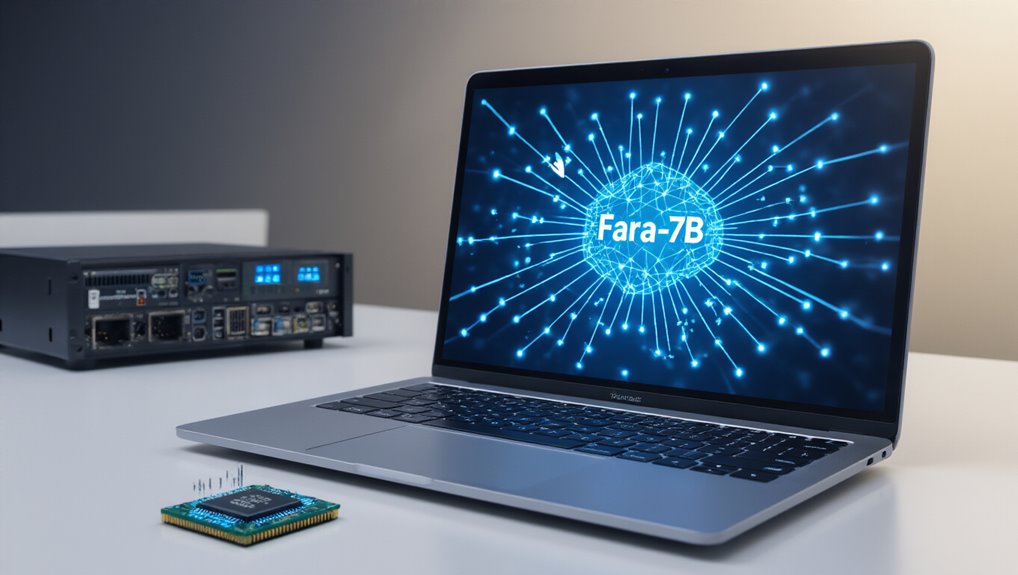

The edge computing revolution has reached an inflection point as artificial intelligence capabilities increasingly migrate from centralized data centers to device endpoints. Global indicators confirm this shift, with the edge AI chips market valued at $7.05 billion in 2024 and projected to reach $36.12 billion by 2034—representing a compound annual growth rate of 17.75%.
This rapid expansion coincides with the proliferation of connected IoT devices, expected to reach 41.6 billion by 2025 and generating nearly 79 zettabytes of data annually.
Real-time decision-making requirements are driving this change. According to Gartner, 70% of AI-driven decisions will occur at the edge by the end of 2025. This evolution is critical for applications where cloud processing delays pose unacceptable risks, such as autonomous vehicles, robotic surgery, and industrial automation.
Edge AI enables devices to collect, analyze, and act on data instantaneously, establishing real-time responsiveness as a baseline requirement across multiple sectors. Similar to B2B integration platforms, this technology creates a unified gateway for streamlined business communications and improved decision-making through real-time data exchange.
Investment distribution across industries reveals meaningful patterns. The Retail & Services sector leads edge spending at 28% of the global total in 2025, while Manufacturing & Resources represents approximately 25%. Financial services demonstrates the fastest growth trajectory, with a CAGR exceeding 15% over the next five years.
The benefits of edge AI extend beyond speed. Processing data at the source dramatically reduces latency, enhances performance, and improves safety in mission-critical applications. Purpose-built edge chips now deliver trillions of operations per second at minimal cost and power consumption.
Additionally, edge computing addresses growing data privacy concerns by processing sensitive information locally rather than transmitting it across networks. This localized processing also eliminates single points of failure in distributed systems, making the overall network architecture more resilient. ASICs lead the market with a 35% market share, offering superior performance and power efficiency for consumer electronics and industrial applications.
With approximately 60% of the 180 zettabytes of data created in 2025 expected to originate outside traditional data centers, organizations must develop detailed edge AI strategies.
Companies that successfully implement edge computing solutions gain competitive advantages through improved operational efficiency, enhanced customer experiences, and new revenue opportunities in an increasingly real-time business environment.