



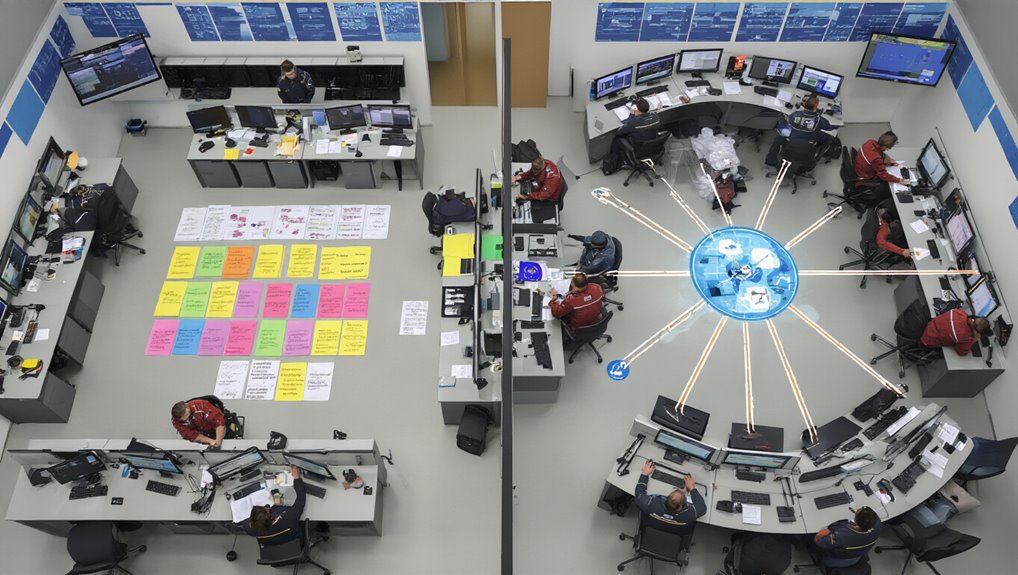
Disasters, security breaches, and operational disruptions demand systematic responses. Organizations must decide between organizing their incident management through discrete tasks or hierarchical parent/child relationships. This structural choice considerably impacts response effectiveness, particularly as incident complexity increases. The Incident Command System (ICS) provides a framework within which either approach can operate, maintaining the core principles of unity of command and standardized terminology.
Task-based incident management works well for straightforward incidents. In this approach, responders break down the incident into specific actionable items:
- Each task has clear ownership
- Progress is tracked individually
- Resolution paths remain focused
For example, a server outage might include tasks for hardware inspection, software diagnostics, and communications. This structure excels in Type 4-5 incidents where complexity remains low and a single team can manage the entire response.
Parent/child incident structures become necessary when dealing with more complex scenarios. These organize related incidents hierarchically, with the parent incident providing coordination while child incidents address specific components. Type 1-3 incidents often require this approach due to their scale and complexity. A major hurricane response demonstrates this structure effectively, with the overall response (parent) coordinating multiple child incidents for evacuation, medical services, and infrastructure repair. The scalable management hierarchy of ICS allows for effective expansion of the incident organization as complexity increases, ensuring appropriate span of control at each level.
When choosing between these approaches, consider:
- Incident scale and geographic distribution
- Number of responding agencies involved
- Expected duration of response activities
- Complexity of coordination required
The right structure aligns with incident typing requirements while optimizing the span of control. Task-based management minimizes overhead for simpler incidents, while parent/child frameworks provide necessary coordination layers for complex responses. The Multiagency Coordination Systems become especially important when incidents require resources from multiple jurisdictions or agencies.
Both approaches leverage common terminology and standardized roles within the ICS framework, ensuring that regardless of structure, responders can integrate seamlessly across organizational boundaries.