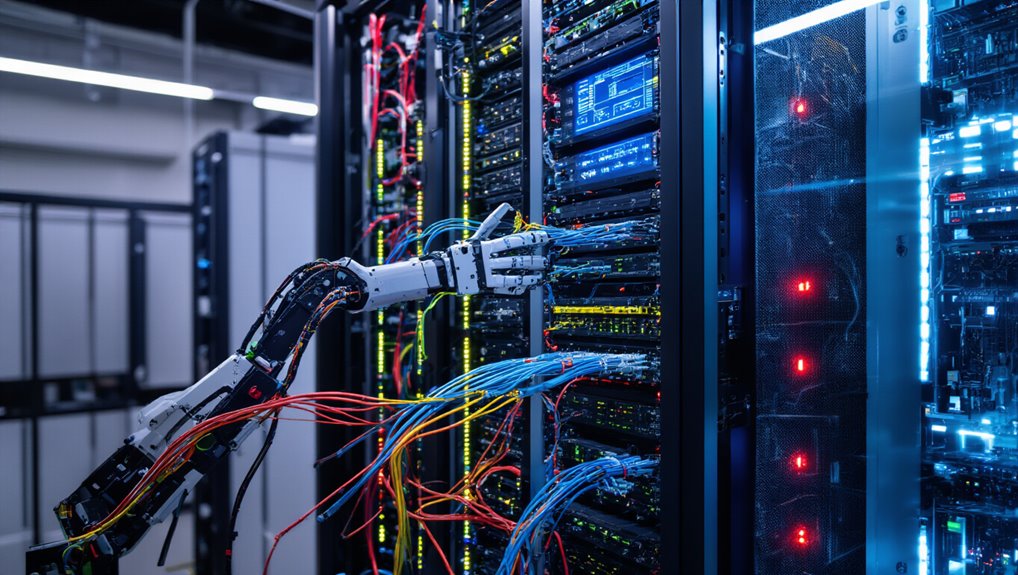
As organizations increasingly rely on multiple vendors and disparate systems to deliver IT services, Service Integration and Management (SIAM) has emerged as a critical framework for coordinating these complex ecosystems.
Recent findings from a joint Stefanini and Scopism survey reveal notable challenges in AI adoption within SIAM frameworks, despite the technology’s transformative potential. The survey highlights a stark reality: while 65% of enterprises now regularly use generative AI—up from 33% in 2023—implementation barriers remain substantial. The integration of hyperautomation techniques has become essential for organizations seeking to overcome these barriers by streamlining end-to-end processes rather than isolated tasks.
The economic stakes are considerable. Data silos cost organizations an average of $7.8 million annually in lost productivity, with employees wasting valuable time searching across disconnected systems. Organizations with strong integration capabilities achieve a remarkable 10.3x return on AI investments, compared to just 3.7x for those with poor integration maturity. This integration gap explains why 84% of system integration projects fail or only partially succeed. The slow adoption pace is consistent with broader market trends showing 60% of large companies are still 1-2 years away from deploying their first GenAI solutions.
Data silos aren’t just inefficient—they’re costly barriers to AI success, widening the gap between integration leaders and laggards.
AI’s impact on SIAM functions is already evident in several key areas:
- Enhanced CRM systems with lead scoring and sentiment analysis
- ERP optimization for supply chain management and financial anomaly detection
- Legacy software extension without costly upgrades
- Hybrid AI solutions combining generative AI with machine learning and digital twins
However, workforce challenges threaten to derail progress. The skills crisis affects 87% of organizations, with 43% facing immediate talent gaps and 44% anticipating shortages soon. Despite offering 28% salary premiums, technical talent remains scarce. Only half of frontline employees regularly use AI tools, creating a “silicon ceiling” that limits organizational benefits. Effective data management practices are critical for organizations to leverage their estimated 163 terabytes of daily data for maximum AI-driven insights.
Successful AI transformation in SIAM requires more than technology investment. Companies confident in their workforce capabilities achieve 2.3x higher transformation success rates.
As SIAM evolves from reactive to predictive service management, organizations must address both technical integration and human factors. The debate continues about whether AI is truly transforming SIAM or if adoption challenges are creating a digital divide between integration leaders and laggards.
What remains clear is that integration maturity markedly multiplies AI’s potential returns.