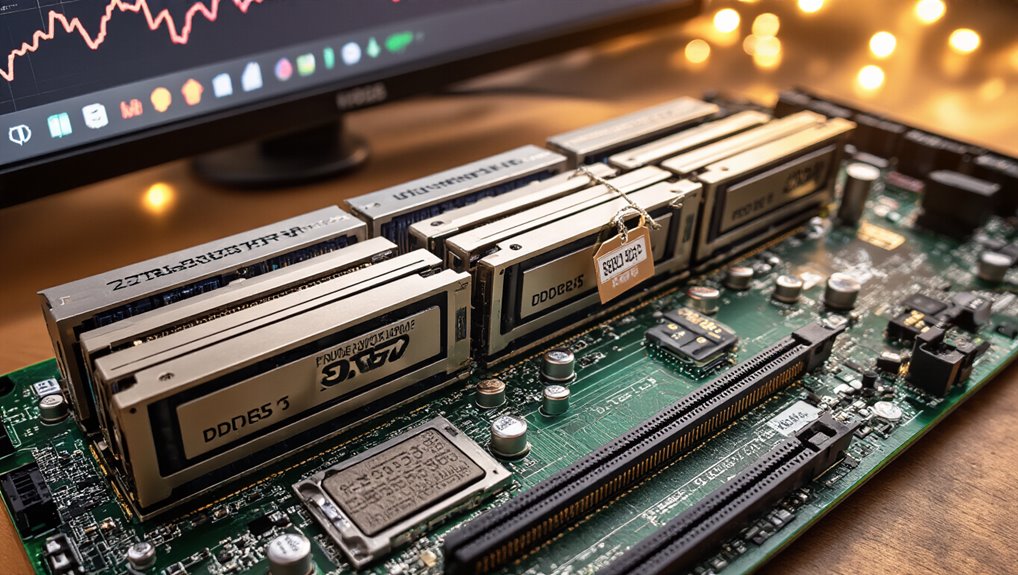
How dramatically can a single component upend years of careful IT budget planning? In 2026, memory modules have transformed from predictable cost factors to volatile budget disruptors. DDR5 prices have surged over 100% compared to the previous year, with some contract prices for DRAM increasing by more than 150%. This unprecedented escalation is forcing IT departments to recalculate procurement strategies and delay planned upgrades.
Memory has become the unexpected budget destroyer of 2026, with DDR5 prices more than doubling year-over-year.
The price spikes stem from an imbalance between supply and demand. AI data centers’ insatiable appetite for memory has exceeded available supply. Manufacturers are prioritizing high-margin server DDR5 and HBM production, leaving traditional PC and workstation RAM increasingly scarce. DRAM supply growth has fallen to just 16% year-on-year, markedly below historical norms. The market is experiencing a structural shift driven by the AI boom and manufacturing relocations, contributing to persistent price inflation despite fluctuations. Organizations managing 163 terabytes of data daily are particularly vulnerable to these price fluctuations as they require substantial memory resources to maintain operational efficiency.
Memory now represents 10-20% of device bill of materials costs, turning what was once a minor consideration into a major budget item. IT departments face tough choices:
- Absorb higher costs by reducing margins
- Decrease RAM in new systems
- Delay hardware refresh cycles
- Build inventory now to hedge against further increases
Consumer devices aren’t immune either. Smartphone average selling prices are projected to rise 3-5% in moderate scenarios and 6-8% in pessimistic ones. An iPhone 17 Max base model could reach $1,281, up from $1,199. PC prices face similar increases of 4-6% in moderate scenarios. The industry is witnessing a significant RAM reallocation from phones to AI data centers, further compounding the supply issues.
Major manufacturers have published official notices about rising prices, with little choice but to pass costs to consumers due to already tight margins. Many are stockpiling inventory in Q4 2025 to mitigate anticipated 2026 shortages.
Weekly price fluctuations are expected throughout 2026, with analysts predicting the low-end market will be hit hardest. The memory crisis stems from structural factors including Nvidia’s strategic pivot and manufacturing reallocation away from consumer devices toward AI applications.
For IT budgets already stretched thin, this memory price surge represents a substantial challenge requiring immediate attention and strategic planning.