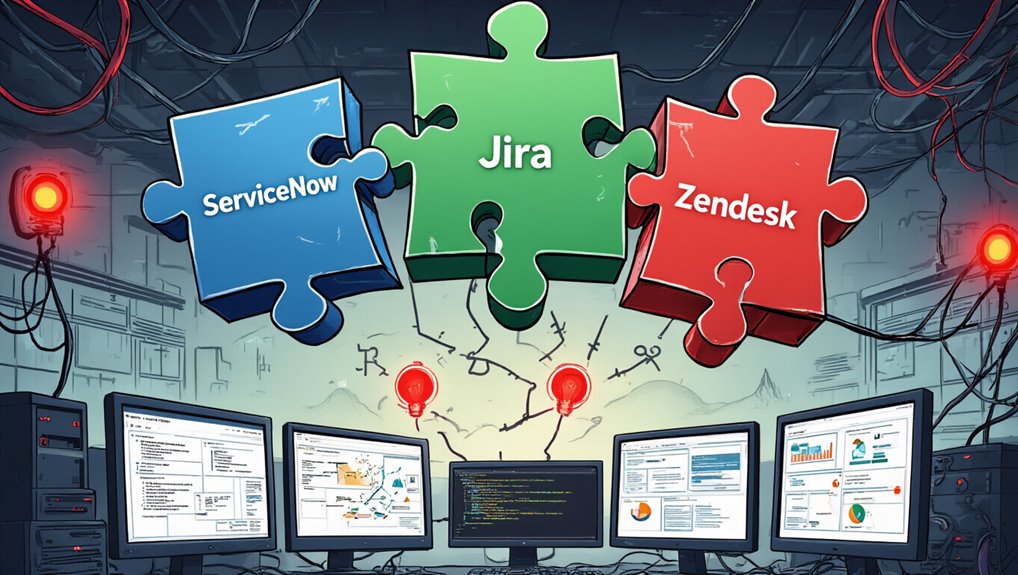
While organizations increasingly rely on specialized tools to manage IT services, project tracking, and customer support, integrating ServiceNow, Jira, and Zendesk presents both substantial opportunities and formidable challenges for modern enterprises.
The technical complexity of connecting these platforms often requires extensive API configuration and custom middleware solutions that demand specialized expertise. Each system maintains unique data models, creating mapping challenges that can result in critical information being lost during synchronization.
The integration process frequently creates operational burdens that IT teams must shoulder. When platform updates occur, integrations require immediate maintenance to prevent system failures. These integrations can introduce errors that manifest as duplicated tickets, inconsistent status updates, and reporting inaccuracies—problems that directly impact service quality. JSM’s emphasis on IT-centric workflows makes it particularly challenging to integrate smoothly with Zendesk’s customer-focused platform.
Data visibility suffers markedly when information remains trapped in system silos. Without unified reporting capabilities, tracking service delivery from initial customer contact through resolution becomes nearly impossible. Teams resort to manual updates between systems, increasing the risk of miscommunication and delayed responses. These disconnected data sources prevent effective analytics that could otherwise drive strategic improvements.
Workflow fragmentation represents another critical concern. As issues move between support teams (Zendesk), development teams (Jira), and IT operations (ServiceNow), handoffs become error-prone transition points. Teams waste valuable time switching between interfaces rather than focusing on problem resolution. This often leads to missed service level agreements and diminished customer satisfaction.
Security vulnerabilities emerge when integration points aren’t properly secured. API connections may inadvertently expose sensitive information or grant excessive access privileges. Organizations face heightened challenges maintaining compliance with regulations like GDPR when data flows across multiple platforms without comprehensive audit trails. Despite these challenges, research shows that integrated systems deliver cohesive and responsive customer experiences that can significantly reduce customer churn rates.
The financial impact extends beyond initial implementation costs. Organizations must account for ongoing maintenance expenses, middleware licensing fees, specialized training, and productivity losses from managing fragmented systems. Integration approaches often fail to properly leverage the distinctive strengths of each platform, with Jira’s structured workflows being particularly underutilized when connected to customer-focused Zendesk implementations.
As enterprises grow, these integration challenges scale proportionally, making it increasingly difficult to maintain efficient operations while preserving data integrity and service quality across all three platforms.