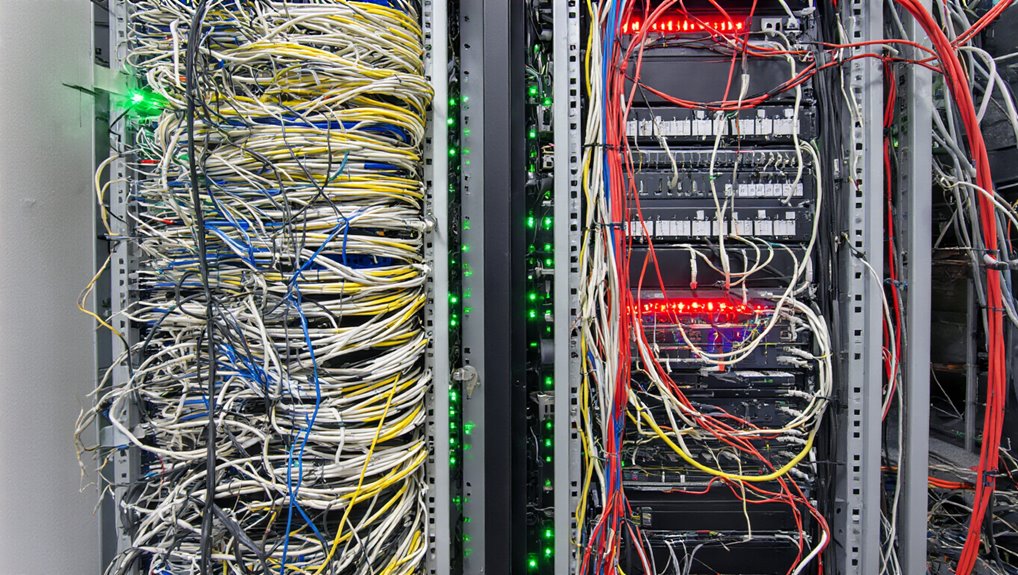
The landscape of IT service management faces vital challenges that hamper operational efficiency and organizational performance. At the core of these challenges lies a fundamental misconception that often goes unaddressed: the confusion between incidents and problems. IT experts consistently warn that failing to distinguish between these two concepts can severely undermine service management effectiveness and lead to cascading operational failures.
Organizations struggling with standardized processes experience this confusion most acutely. Without uniform workflows, IT teams frequently misclassify incidents as problems and vice versa, resulting in inappropriate response protocols and resolution approaches. This misclassification directly contributes to the 34% rise in ticket volumes that support teams now face, with each incident potentially generating multiple redundant tickets costing between $6 and $40 each to process. Implementing a service catalog helps define available IT services and processes, creating clarity that reduces such misclassifications.
Process confusion drives a 34% surge in IT tickets, with each redundant case costing organizations up to $40.
Communication gaps between siloed IT teams further exacerbate this confusion. When incident management and problem management teams operate independently without clear handoff procedures, essential diagnostic information gets lost. This results in repeated incidents that could have been prevented through proper root cause analysis. Statistics show that 13% of tickets cause 80% of productivity loss, many of which stem from recurring incidents that were never properly addressed as underlying problems. Organizations that effectively implement ITSM report 80% fewer service problems after adoption, highlighting the importance of proper incident-problem classification.
Legacy ITSM frameworks compound these issues by lacking the sophistication to properly categorize and route service requests. Modern IT environments demand more nuanced approaches that can distinguish between:
- Incidents – disruptions requiring immediate restoration
- Problems – underlying causes requiring investigation and permanent resolution
- Service requests – standard changes that follow predictable workflows
The integration of AI and automation offers promising solutions by analyzing incident patterns to identify potential problems before they cascade. Machine learning algorithms can now detect correlations between seemingly unrelated incidents that human analysts might miss.
However, implementing these technologies requires addressing the skills gap reported by 87% of organizations, particularly in areas of incident classification and problem management. With only 48% of organizations rating their ITSM capabilities as “great” or “good,” there’s significant room for improvement in distinguishing between incidents and problems.
Ultimately, experts emphasize that clear distinction between incidents and problems forms the foundation for effective service management and sustainable operational excellence.