



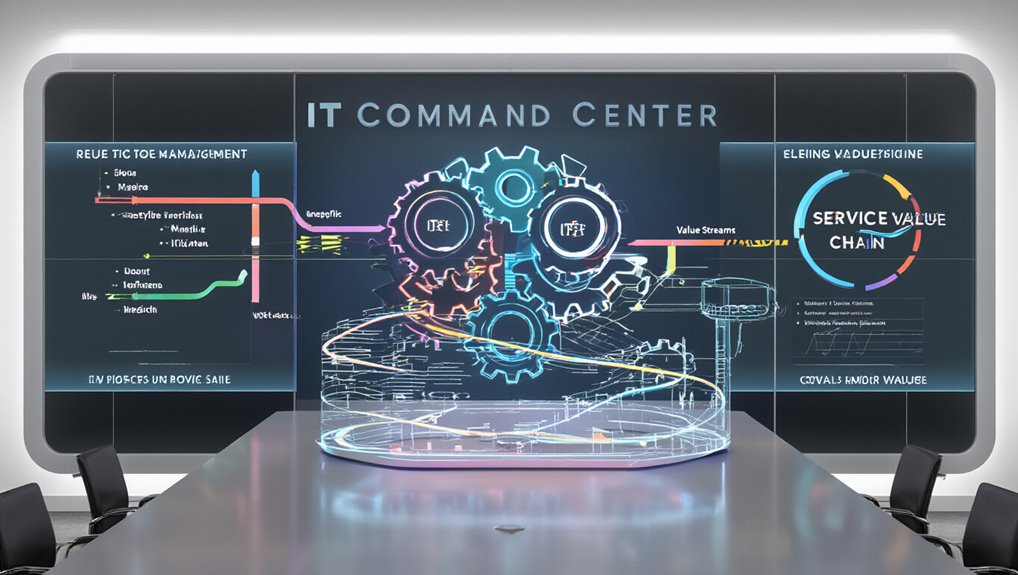
Why ITIL 4 project management defies traditional rules comes down to one shift: it treats a project as a temporary effort to create value through service improvement or innovation, not as a delivery of scope, schedule and budget. Project managers can apply it by working within the four dimensions of service management and the seven guiding principles.
How Does ITIL 4 Redefine Project Management?
ITIL 4 moves project management toward a holistic, service-oriented framework. Conventional project management focuses mainly on scope, schedule and budget. ITIL 4 instead defines projects as temporary endeavors designed to create value through service improvement or innovation.
This redefinition asks project managers to think beyond deliverables. They also need to consider how their work contributes to the broader service ecosystem.
What Are the Four Dimensions of Service Management in ITIL 4 Projects?
ITIL 4 integrates project management with its four dimensions of service management. These dimensions widen what a project manager must consider:
- Organizations and People: focusing on culture and competencies
- Information and Technology: leveraging tools and data effectively
- Partners and Suppliers: collaborating with third parties
- Value Streams and Processes: optimizing workflows for value creation
How Does the Service Value System Change Project Success?
Traditional IT project management often operates in isolation. ITIL 4 places projects within a broader service value system, so project activities must align with the organization’s strategic goals and adapt continuously to changing customer needs.
Success is therefore judged not only by on-time delivery, but by how well the outcomes enhance service value. The ITIL service value chain supports this with a flexible operating model for creating, delivering and continuously improving services through interconnected activities. Information Technology Service Management frameworks help resolve IT issues promptly while keeping services aligned with business objectives.
Which ITIL 4 Guiding Principles Shape Project Execution?
The seven guiding principles of ITIL 4 further change how projects run. Three stand out for project work:
- “Focus on Value” directs all project decisions toward maximizing stakeholder benefits.
- “Start Where You Are” requires assessing current conditions rather than assuming a blank slate.
- “Progress Iteratively with Feedback” promotes adaptive approaches over rigid planning.
Together, these principles foster a more responsive, value-centered project environment.
How Does Project Management Fit Among the 34 ITIL 4 Practices?
ITIL 4 positions project management as one of 34 management practices. It must work together with portfolio management, organizational change management and risk management. This interconnected approach makes projects catalysts for organizational transformation rather than isolated technical implementations.
How to Apply ITIL 4 Project Management
- Define the project as a temporary effort to create value through service improvement or innovation, not only as a set of deliverables.
- Review the work against the four dimensions: people, technology, partners and suppliers, and value streams.
- Assess current conditions first, following “Start Where You Are”.
- Plan iteratively and collect feedback instead of locking in a rigid plan.
- Write a detailed Service Management Plan that outlines how Service Management principles apply across the project lifecycle.
- Measure success by the effect on service value, not just on-time delivery.
Common Questions About ITIL 4 Project Management
Does ITIL 4 replace traditional project management?
The article does not describe it as a replacement. ITIL 4 treats project management as one of 34 practices that work alongside portfolio, change and risk management. It changes what projects aim for: service value rather than scope, schedule and budget alone.
Why does alignment with strategic goals matter for IT projects?
ITIL 4 places projects inside a service value system, so their activities must support the organization’s strategic goals and adapt to evolving customer needs. Projects that run in isolation risk delivering outputs without improving the service.
Moving From Deliverables to Service Value
Teams adopting ITIL 4 can begin by changing how they define and measure project success. Starting with the Service Management Plan and the guiding principles gives project work a clear link to service value.