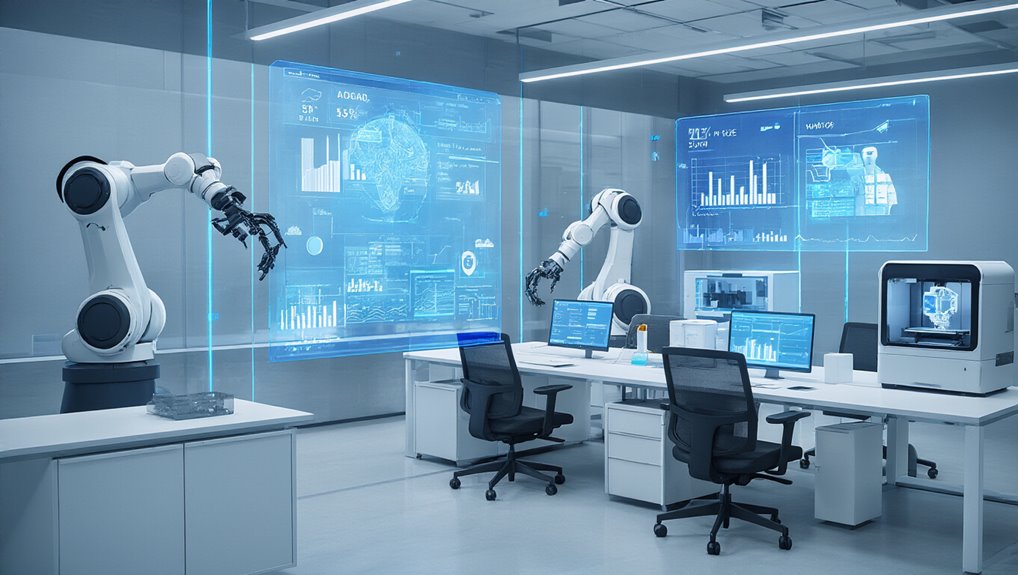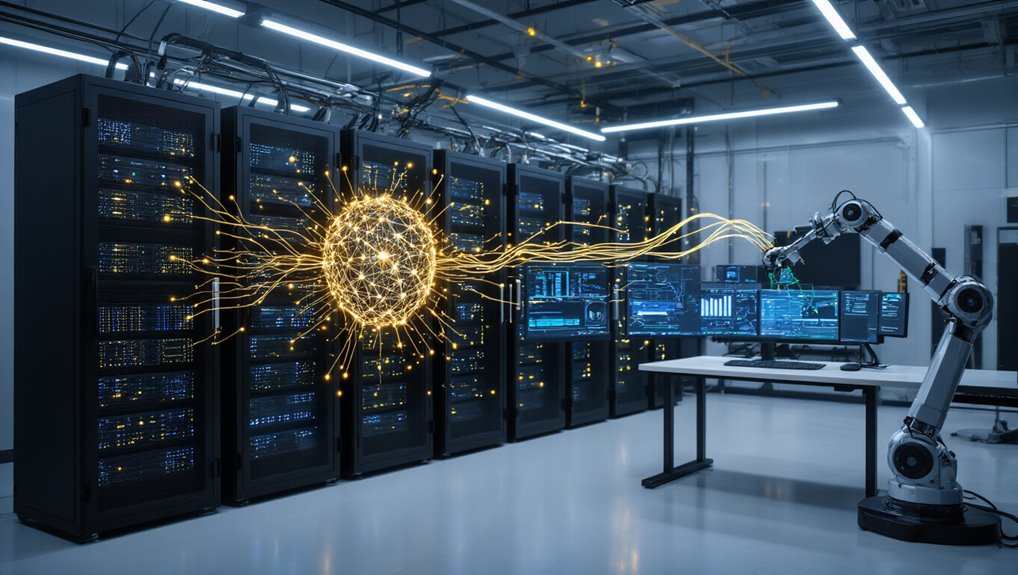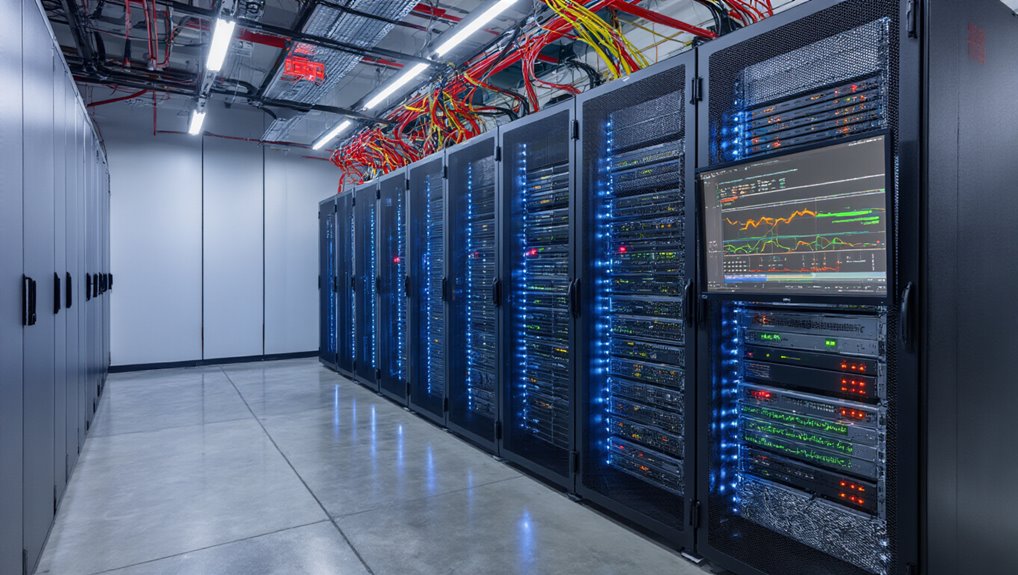
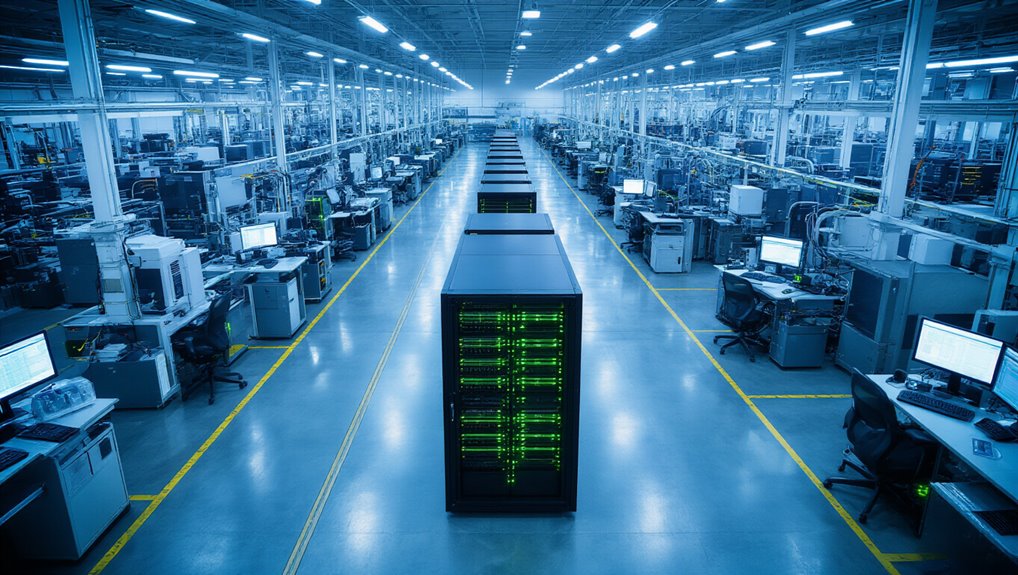
In the domain of modern IT service management, artificial intelligence is transforming how organizations maintain their infrastructure by predicting equipment failures before they occur. Predictive maintenance uses machine learning models trained on sensor data and system logs to forecast when equipment will fail. This approach shifts ITSM from reactive firefighting to proactive problem prevention, dramatically reducing unplanned downtime that disrupts business operations. Many organizations pair predictive models with integrated ITSM platforms to create automated remediation workflows and a single source of truth for operations system integration.
AI-powered predictive maintenance transforms IT service management from reactive firefighting to proactive problem prevention, dramatically reducing costly unplanned downtime.
The performance improvements are substantial and measurable. Transformer-based natural language processing models reduce Mean Time to Resolution by 56.7%, while recurrent neural networks cut MTTR by 46.7%. ServiceNow’s Predictive AIOps prevents 25% to 35% of critical P1 outages before they impact users. Organizations implementing AIOps report MTTR improvements of at least 30%, with some achieving reductions up to 66%. Automation success rates jump from 45% to 89% when you deploy AI-powered ITSM tools.
Despite these compelling metrics, adoption remains inconsistent. While 62% of organizations recognize AI’s importance for competitive advantage, only 34% have implemented it. Currently, 42% of IT professionals use automation for predictive maintenance, but just 28% employ AI-powered root cause analysis. This gap represents a significant missed opportunity, especially since 85% of IT professionals believe AI reduces ticket volume through proactive issue detection. Additionally, 89% say siloed data negatively impacts IT operations, highlighting a critical barrier to maximizing AI’s predictive capabilities.
Real-world results validate the technology’s value. One ERM AI ITSM implementation achieved a 40% increase in user satisfaction alongside a 40% reduction in ticket resolution time. Microsoft Azure now anticipates hardware and software failures days in advance, enabling planned maintenance rather than emergency responses. A BigPanda study across 400+ IT professionals confirmed 30%+ MTTR improvements post-AIOps deployment. Importantly, 81% of AIOps users report positive ROI.
Implementation requires careful planning. You need high-quality data from sensors and logs for accurate model training. Your AI models must integrate seamlessly with existing ITSM platforms via APIs to generate automated service requests. Success demands tracking key performance indicators from day one, including MTTR, incident volume, and uptime metrics. Industry benchmarks show AI automates 15% to 30% of tickets, freeing your team to focus on strategic initiatives rather than routine maintenance tasks. Manufacturing environments particularly benefit from predictive maintenance by optimizing resource allocation based on data-driven insights rather than relying on fixed maintenance schedules.