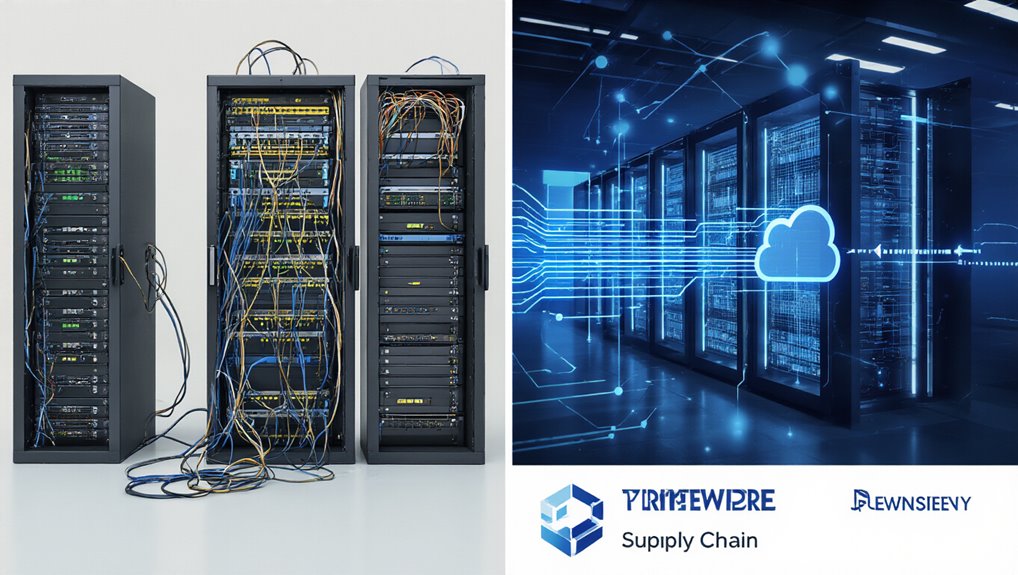
Powering the interconnected business landscape, middleware technology has emerged as the critical backbone of successful B2B digital transformation initiatives. Organizations relying on outdated integration methods face significant challenges in today’s fast-paced digital economy. Legacy systems create bottlenecks that prevent real-time data sharing, hamper automation efforts, and struggle with cross-platform compatibility—issues that modern businesses cannot afford.
The global B2B middleware market, valued between $5.47B and $14.5B, continues to expand rapidly with projected CAGR rates of 7.18% to 11.4% through 2033. This growth is further accelerated by the increasing demand for cloud-based solutions across various industry verticals. Modern platforms can be deployed as on-premises solutions or in the cloud, accommodating diverse business requirements. This growth reflects middleware’s essential role in solving critical business challenges. When you implement middleware solutions, you gain three key advantages:
- Seamless connectivity between disparate applications
- Automated document exchange that reduces errors
- Real-time data access that enables faster decision-making
Technical limitations of legacy systems become particularly apparent in supply chain management, where visibility and responsiveness determine competitive advantage. Middleware abstracts these complexities, creating smooth pathways for data to flow between organizations. API-driven integration now allows businesses to establish flexible, modular connections with partners without extensive coding requirements.
Legacy integration bottlenecks disappear when middleware creates frictionless data highways between supply chain partners.
The business impact is substantial and measurable. Companies implementing middleware solutions report reduced manual intervention, faster transaction processing, and lower IT maintenance costs. For example, e-commerce operations—which grew 14.2% to $870B in the U.S. alone in 2021—rely on middleware to manage the complex web of transactions between platforms, payment systems, and fulfillment partners.
Industries ranging from financial services to healthcare are adopting middleware to overcome integration barriers. Both enterprises and SMEs benefit, with smaller companies leveraging cloud-based, subscription models that require minimal technical expertise. The integration of AI and IoT capabilities is transforming 45% of the middleware market by enhancing automation and enabling predictive analytics.
The shift toward hybrid cloud architectures further demonstrates middleware’s versatility in addressing diverse business needs and regulatory environments. As digital transformation accelerates, organizations that continue relying on legacy integration methods will inevitably fall behind competitors who embrace middleware’s transformative capabilities.