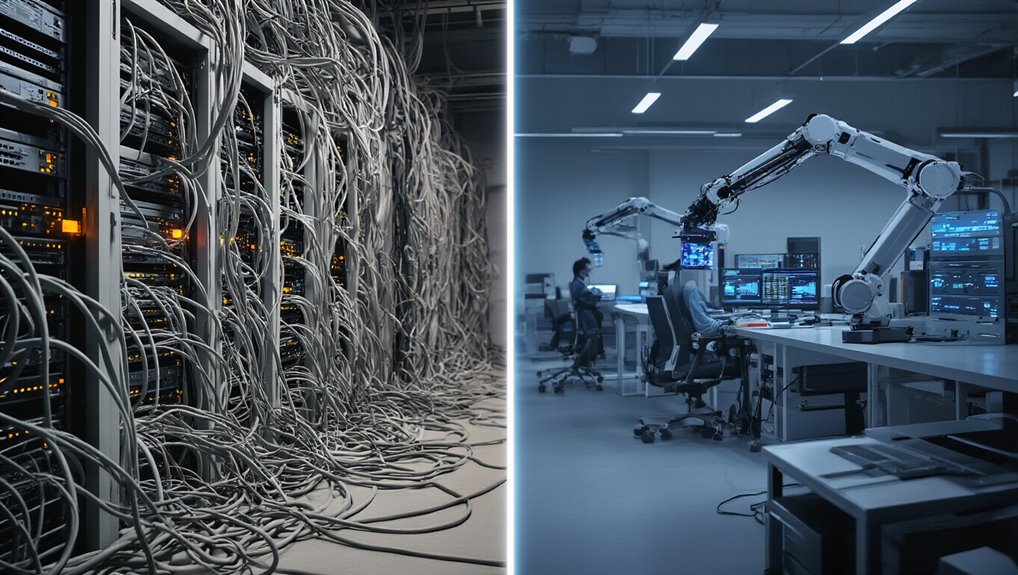
In the face of mounting service requests and rising employee expectations, traditional IT service management platforms are struggling to keep pace with modern workplace demands. Legacy service desks rely on manual triaging and routing, creating bottlenecks that slow resolution times and frustrate employees. Siit’s AI-first approach fundamentally changes this equation by automating the processes that bog down conventional systems.
Legacy service desks create bottlenecks through manual processes—Siit’s AI-first platform automates triaging and routing to eliminate delays and frustration.
The platform processes service requests in real time, categorizing and prioritizing them without human intervention. By learning from historical data, it reduces misclassification and routing errors while improving accuracy over time. Siit automatically routes requests to specialists based on workload, expertise, and availability. Similar AI-powered ITSM platforms like Ivanti Neurons handle over 60% of tickets without human input, demonstrating the transformative potential of this technology.
Zero-touch workflows eliminate the repetitive tasks that consume IT resources. Siit automates routine requests, password resets, and access provisioning, resolving requests in seconds rather than hours. The platform coordinates complex processes like employee onboarding across IT, HR, and facilities while enforcing security policies and automating compliance tracking.
You can build these automations using a no-code workflow editor with native integrations. Organizations often see a 20% reduction in IT operational costs after ITSM deployment, supporting a strong business case for automation.
Self-service capabilities empower employees to solve problems independently. AI-powered knowledge bases and chatbots provide instant support, guiding employees through processes via conversational AI across multiple channels. The system surfaces relevant solutions based on request context, increasing self-service adoption and reducing manual handling.
Siit transforms reactive service management into proactive problem prevention. Using predictive analytics, it identifies potential issues before they impact operations by monitoring user behavior, historical incidents, and business cycles. The platform spots patterns in delayed requests and adjusts workflows in real time, suggesting actions for likely SLA breaches before tickets are created. By analyzing historical requests and system metrics, Siit flags recurring issues and recommends proactive patches or updates.
The platform integrates directly with Slack, Microsoft Teams, Jira Service Management, and Google Workspace, managing requests where teams actually work. This multi-channel support enhances collaboration and accelerates resolution times. Integration with Okta and JumpCloud enables automated access requests through AI-driven workflows with role-based policies.
The results include reduced service request resolution times, improved SLA compliance, decreased escalations, and higher employee satisfaction scores. Legacy service desks simply cannot match this level of intelligent automation and strategic transformation.