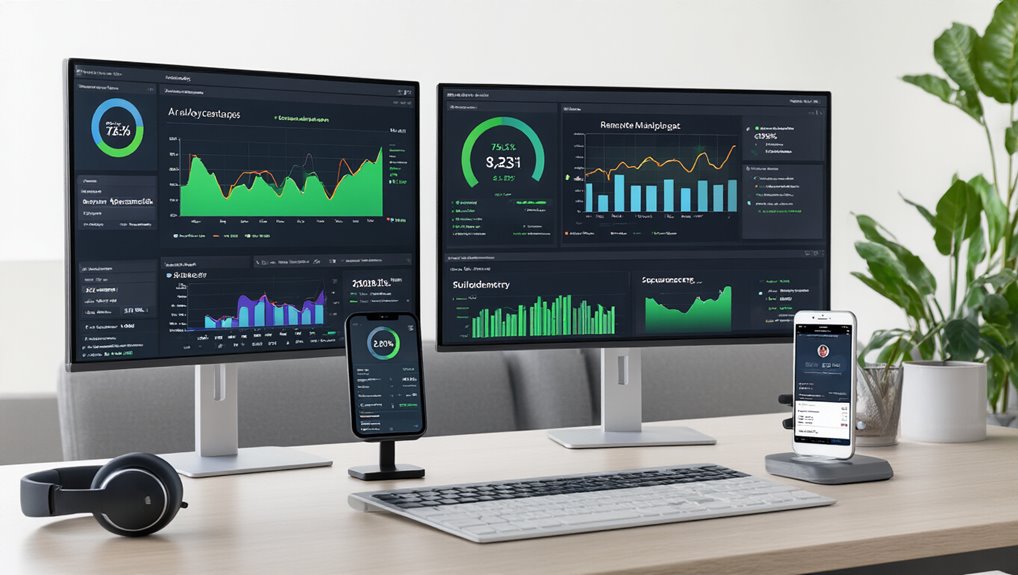
How has the landscape of IT support transformed in recent years? The remote work revolution has fundamentally altered how businesses approach technical support, with remote IT jobs increasing threefold since 2020. This shift represents a significant departure from traditional IT Service Management (ITSM) frameworks that relied heavily on physical presence and standardized ticketing systems.
The emergence of context-aware remote IT support directly correlates with measurable performance improvements. With 78% of managers reporting that remote teams exceed performance goals, organizations are rapidly embracing virtual support models that provide real-time assistance regardless of location. This evolution leverages artificial intelligence and machine learning to anticipate user needs based on historical data and system behaviors. Organizations recognize that enabling work flexibility contributes to talent retention, with 23% of employees citing it as a key reason to stay or leave.
Cost efficiency drives this transformation. Companies implementing remote support solutions save an average of $11,000 annually through reduced physical infrastructure costs. Traditional ITSM systems often require substantial on-premises resources, while modern remote solutions operate on lightweight, cloud-based architectures that scale dynamically with organizational needs. Enterprise applications enhance this efficiency by centralizing data management and enabling real-time analytics for better decision-making.
Remote IT support adoption spans multiple sectors. The computer and IT industries lead implementation, with customer service, sales, and healthcare following closely behind. These sectors benefit from specialized virtual platforms that enable all-encompassing technical support without geographic limitations.
Organizations can now access global talent pools, with over 13,800 distinct employers posting remote IT positions in 2025 alone. The increasing demand for remote IT professionals is particularly evident in healthcare companies like UnitedHealth Group, which offers numerous remote positions in technology development and clinical support services.
The effectiveness of context-aware support becomes evident in engagement metrics. Remote workers show 29% engagement compared to 20% for on-site employees, indicating that properly implemented remote support systems enhance rather than diminish productivity.
Modern solutions incorporate:
- Predictive analytics that identify potential issues before they impact users
- Automated resolution pathways for common technical problems
- Contextual user assistance based on behavior patterns and system usage
As remote work stabilizes at 22.1% of the U.S. workforce, organizations clinging to traditional ITSM models risk competitive disadvantage. Smart, context-aware remote support doesn’t merely replicate in-person IT assistance—it fundamentally reimagines service delivery for a distributed workforce.