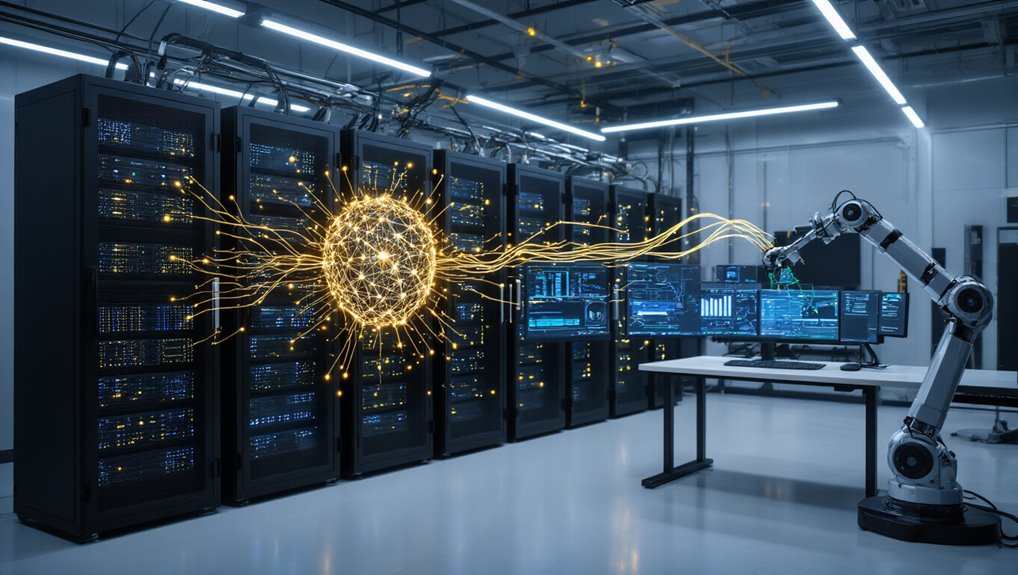

How is artificial intelligence revolutionizing the way organizations manage their IT services? The rapid evolution of autonomous AI systems is fundamentally transforming traditional IT Service Management (ITSM) processes. These intelligent systems can now execute, resolve, and optimize IT workflows without human intervention by leveraging machine learning, deep learning, and natural language processing technologies.
Traditional ITSM relies heavily on manual ticketing systems and human-driven workflows. This reactive approach is becoming increasingly outdated as autonomous AI demonstrates superior capabilities. Organizations using AI copilots report a 55% reduction in Level 1 ticket volume, while GenAI cuts ticket resolution times by an impressive 54%. These efficiency gains translate to thousands of saved hours annually.
AI-powered ITSM is leaving reactive, manual systems behind, delivering dramatic reductions in ticket volume and resolution times.
By 2025, 75% of organizations are expected to adopt AI-powered ITSM platforms, with the market projected to reach $12.2 billion. This rapid growth reflects the tangible benefits autonomous systems deliver. You’ll see these systems anticipate problems before they occur, auto-resolve incidents, and continuously adapt responses based on context and outcomes. Standardized procedures implemented across AI systems ensure consistent service delivery while minimizing operational risks.
The convergence of ITSM platforms with ITOM, SecOps, and FinOps creates integrated hubs that consume and analyze data from multiple sources:
- User behavior patterns
- Asset telemetry
- Incident patterns
- Application logs
Despite these advantages, implementation challenges exist. 42% of IT professionals cite data vulnerabilities as a major concern, and AI systems risk perpetuating biases if not properly trained. The integration of 5G technology significantly enhances AI adoption by enabling the real-time data transfer necessary for effective machine learning applications. You must implement robust quality assurance processes to guarantee AI-driven changes conform to governance standards.
Will traditional ITSM become obsolete by 2026? The evidence suggests a significant transformation rather than complete obsolescence. While routine tasks will be increasingly automated, human oversight remains essential for complex decision-making and governance. Agentic AI systems that can reason, plan, and act semi-independently are enhancing operational efficiency and creating superior user experiences. Organizations that successfully integrate autonomous AI capabilities while addressing the associated challenges will gain substantial competitive advantages through improved operational efficiency, reduced costs, and enhanced service quality.