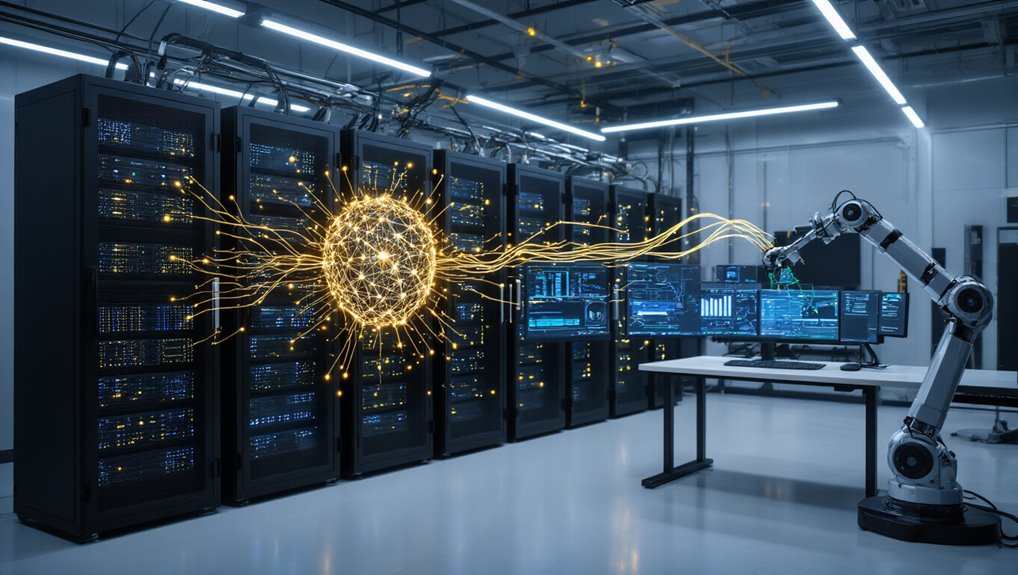
In an era of mounting operational pressures and digital transformation, manufacturing organizations face an urgent need to fortify their systems against disruptions. The global ITSM market reflects this reality, valued at USD 10.5 billion in 2023 and projected to reach USD 22.1 billion by 2028 with a 15.9% CAGR. This growth signals a fundamental shift in how manufacturers approach operational resilience.
ITSM investment is surging as manufacturers shift from reactive firefighting to predictive resilience in an increasingly disrupted operational landscape.
You need to understand that ITSM automation delivers measurable impact on your operational stability. Organizations implementing these systems cut service desk tickets by 50% and boost first-contact resolution by 60%. GenAI technology further accelerates recovery, reducing ticket resolution times by 54% and saving thousands of operational hours. These improvements stem from hyperautomation reducing manual dependencies while enabling real-time workflow adjustments without downtime. ITSM frameworks also emphasize aligning IT services with business objectives to drive consistent outcomes and efficiency improvements, and this alignment is increasingly recognized across industries as essential for resilience (ITSM frameworks).
Proactive incident management transforms your approach from reactive firefighting to predictive prevention. Predictive analytics leverage historical data and performance metrics to detect failures before they cascade into major disruptions. AI-powered diagnostics pinpoint issues faster, while condition-based maintenance extends equipment lifespan by 20% and reduces costs by 25%. Real-time dashboards provide actionable insights that support system stability and effective risk mitigation. Organizations with advanced ITSM practices achieve a 40% improvement in incident resolution times while experiencing 30% fewer major incidents.
Supply chain resilience receives direct benefits from ITSM integration. AI-powered models enable dynamic risk assessment, proactive inventory adjustments, and shipment rerouting when disruptions occur. Digital twins and MES integration allow you to test what-if scenarios with lower risk exposure. Self-service portals improve supply chain efficiency by up to 20%, while automated system restoration minimizes network disruptions.
However, adoption challenges require strategic attention. Legacy infrastructure and fragmented systems limit data visibility and scaling capabilities. Your workforce needs reskilling as roles shift from operators to analysts. Cybersecurity risks escalate with new endpoints and cloud connections, making data protection a priority for 36% of companies. Complex dependencies create integration weak spots that demand careful management. Data quality and preprocessing directly determine the effectiveness of predictive models deployed across manufacturing operations.
Manufacturing leaders recognize this imperative: 85% view these technologies as primary competitiveness drivers. ITSM transforms operational uncertainty into controlled, predictable environments where you maintain continuous service delivery despite external pressures.